Perched on a rugged clifftop in the far north of Scotland, Bucholie Castle stands as one of the most striking and mysterious ruins in the Highlands. The castle, now a dramatic shell of stone walls exposed to the roaring winds and crashing waves below, tells a story that stretches back to the era of Norse raiders, medieval clan struggles, shifting loyalties, and the harsh realities of life on the edge of the world. For travellers, historians, and lovers of Scotland’s atmospheric landscapes, Bucholie Castle is more than simply a ruin. It is a living reminder of where myth and history meet, where nature and architecture intertwine, and where time seems to stand still.
Although many Scottish castles are grand, preserved, and tourist-ready, Bucholie Castle offers something different. It is remote, wild, and haunting. To visit it is to feel you have entered another century. There is no visitor centre, no guided tour, and no polished lawns. Instead, Bucholie Castle stands solitary above the sea, shaped by centuries of storms and silence. The sense of isolation and mystery that surrounds it makes this ruin one of the most atmospheric historical sites in all of Scotland.
The Location and Landscape
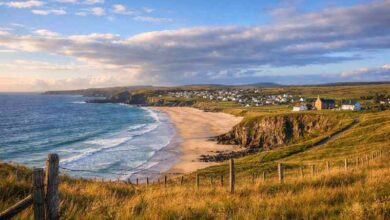
Bucholie Castle is located in Caithness, a region known for its stark beauty, sweeping coastlines, and ancient heritage. Instead of soft rolling hills or manicured estates, the landscape is marked by cliffs, open skies, and the constant presence of the sea. The castle sits on a narrow headland jutting out into the North Sea, where the wind rarely stops and the waves crash far below.
This dramatic positioning was no accident. The site was chosen for its natural defence. Sheer drops protect three sides of the promontory, making it nearly impossible to attack from the sea. A deep trench was carved across the narrow land bridge that connects the headland to the mainland. Any intruder who attempted to cross would be completely exposed. In this way, Bucholie Castle did not rely on thick walls or grand stone towers alone. Its strongest defence was nature itself.
Even today, the approach to the castle reflects its harsh origins. The footpath across the headland is narrow and uneven, and the cliffs on either side fall away sharply. The air smells of salt, and seabirds wheel overhead. Many visitors describe the walk to Bucholie Castle as unforgettable, not simply because of the view, but because the landscape makes you feel the presence of the past so vividly.
Norse Origins and the Legend of Sweyn Asleifsson
The earliest known fortification on this site predates the castle’s medieval structure. Local tradition, supported by historical accounts of Norse presence in northern Scotland, attributes the first fortress here to a powerful Norse sea-raider named Sweyn Asleifsson in the 12th century. Sweyn was a figure of legend: part pirate, part noble, part warrior, and entirely fearless. He controlled sea routes, plundered coastal settlements, and held influence across the northern Scottish Isles.
The fortress he built was known as Lambaborg, and it served both as a defensive stronghold and a strategic lookout. From this dramatic headland, Sweyn could see ships long before they appeared near the shore. The extreme cliffs, combined with the difficulty of reaching the fortress, made it nearly invincible to attack by land.
Though the original structure from Sweyn’s time has disappeared, the stories of his presence remain woven into the identity of the site. The castle that stands today reflects later periods, but the spirit of its Norse origins still lingers in the wind and the waves that surround it.
Medieval Reconstruction and the Mowat Family
The castle as we recognise it today was built centuries later. By the 14th and 15th centuries, the land had come under the control of the Mowat family, nobles who held estates across northern Scotland. They rebuilt the stronghold, transforming it into a fortified residence while maintaining the advantage provided by the headland.
The design during this period included a tower house, courtyard, defensive walls, and narrow passageways. Thick stone walls and vaulted rooms provided shelter from both enemies and the harsh northern weather. Though smaller than grand royal castles, Bucholie Castle was well-suited to the needs of a noble household living in a remote but strategically important region.
The Mowats held Bucholie Castle for several generations. However, by the 17th century, the property changed hands again, passing to the Sinclair family. Around this time, the castle began to fall into disuse. The remote location that had once provided safety now worked against practicality. Transportation, climate, and shifting political power made life at Bucholie Castle increasingly difficult. Gradually, the stronghold was abandoned to the wind and the sea.
Architectural Features and Present Condition
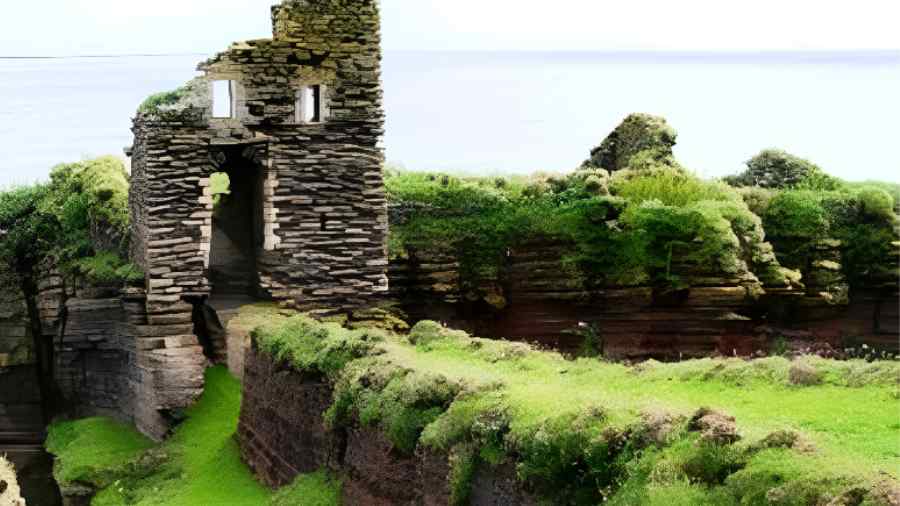
Today, Bucholie Castle stands in a state of ruin, yet many of its defining features remain visible. The most striking element is the relationship between the man-made structure and the natural landscape. Rather than dominating the headland, the castle seems to grow out of the rock itself, as though it belongs to the cliff.
Fragments of the tower house can still be seen, along with sections of the courtyard walls and the remains of storage or living spaces. Some walls rise high against the sky, while others have crumbled, leaving jagged edges and open chambers. The interior is exposed to the elements, and grass now grows where people once lived, worked, and kept fires burning.
Although the ruin is beautiful and atmospheric, it is also dangerous. The ground near the cliff edges can be unstable, and the narrow ridge that leads to the castle requires careful footing. Many visitors choose to admire the castle from a safe distance rather than stepping inside the structure. The experience of simply being near the site, hearing the sea below and feeling the wind against your face, is powerful on its own.
Cultural Significance and Emotional Impact
Bucholie Castle is not a castle of grandeur or luxury. It is a castle of endurance, defiance, and stark beauty. It represents a time when life was shaped directly by the land and sea, when power depended on physical survival as much as political negotiation.
Because of its isolation, Bucholie Castle has not been polished or softened for modern tourism. As a result, it retains something rare: authenticity. It feels old, wild, and untouched. This quality is increasingly appreciated by travellers who seek experiences that feel real rather than staged.
Standing before the ruin, many people describe a feeling of stepping into a forgotten world. The waves echo against the cliffs like distant voices, the wind whistles through broken stones, and for a moment, history does not feel far away. This emotional depth is what makes Bucholie Castle truly memorable.
Visiting Considerations
Those who wish to visit Bucholie Castle should be prepared for a walk across uneven ground and exposed cliff edges. Good footwear, attention to weather conditions, and a calm, careful pace are essential. It is not a place to rush, nor a place to take risks. Respect for the landscape is necessary, both for personal safety and for preservation of the site.
There are no visitor facilities, gift shops, or guided tours. The journey is self-guided, and the pleasure comes from the quiet, the view, and the feeling of connection with the past.
Conclusion
Bucholie Castle stands as one of Scotland’s most atmospheric and unforgettable historic sites. Its clifftop location, ancient origins, medieval history, and haunting beauty combine to create an experience that speaks deeply to the imagination. Far from the polished attractions of more accessible castles, Bucholie Castle offers something raw and real: a direct encounter with history, landscape, and time. For those who seek a place that feels alive with the echoes of the past, where the sea sings against the stone and the sky opens wide, Bucholie Castle remains a remarkable treasure at the edge of Scotland.