Barry Buddon is one of Scotland’s most distinctive and historically significant military landscapes. Located on the east coast of Scotland in Angus, close to Carnoustie, Barry Buddon has served the United Kingdom for generations as a vital training ground. Its importance goes far beyond military use, as it also represents a rare blend of protected natural environment, deep-rooted history, and local cultural identity.
Quick Bio
| Detail | Information |
|---|---|
| Name | Barry Buddon |
| Type | Military Training Area |
| Age | Over 170 years |
| Height | Low-lying coastal terrain |
| Physical Appearance | Sand dunes, grassland, coastal plains |
| Location | Angus, Scotland |
| Purpose | Military training and live-fire exercises |
| Education | Not applicable |
| Career Highlights | Active since the 19th century, used in both World Wars |
| Net Worth | High strategic and environmental value |
| Family | Not applicable |
| Social Media | No official social media presence |
What Is Barry Buddon?
Barry Buddon is officially known as the Barry Buddon Training Area. It is owned and managed by the UK Ministry of Defence and is primarily used as a live-fire rifle range and military training facility.
The area stretches along the coastline between Barry and the River Tay. Its geography makes it particularly suitable for controlled training exercises, while its restricted access has helped preserve its natural features.
Historical Background of Barry Buddon
The history of Barry Buddon begins in the mid-nineteenth century. Around the 1850s, local volunteer rifle units started using the sandy coastal land for weapons training. The terrain offered natural safety features, including wide open spaces and sand dunes that acted as protective barriers.
By the late 1890s, the land was formally purchased by the British War Office. From that point onward, Barry Buddon became a permanent military training site. It played an important role during the First World War, the Second World War, and throughout the Cold War era.
What makes Barry Buddon remarkable is its continuity. Few training areas in the UK have remained active for such a long period while retaining their original purpose.
Location and Landscape
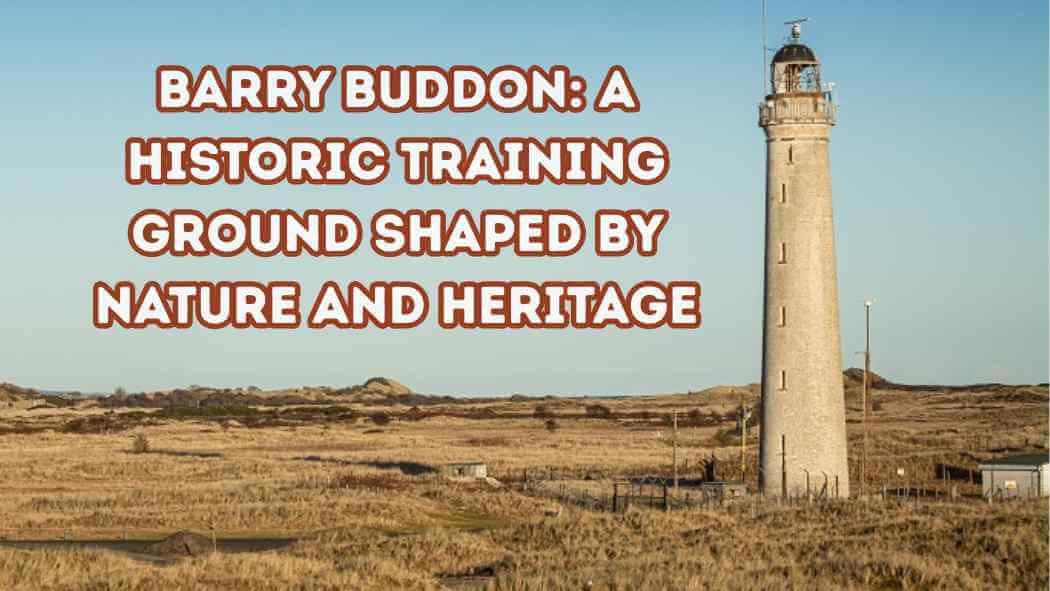
Barry Buddon lies on Scotland’s east coast in Angus, bordering the North Sea. The landscape is shaped by natural coastal processes and includes expansive sand dunes, grass-covered plains, and light woodland areas.
The dunes are among the most important features of the site. They not only provide natural protection during training activities but also support rare plant and insect life. The flat open areas behind the dunes are ideal for military drills and firing ranges.
Environmental and Ecological Value
Despite being a military training ground, Barry Buddon is also recognised for its environmental importance. Large sections of the land are protected due to the unique dune ecosystem found there.
Restricted public access has limited development and human interference. As a result, many species that struggle to survive elsewhere have found a stable habitat within Barry Buddon. Conservation organisations regard the area as a valuable example of how controlled land use can benefit biodiversity.
Military Role in the Modern Era
Today, Barry Buddon continues to serve as an active training facility for the British Armed Forces. The site is used for a range of activities, including live-fire exercises, tactical movement training, and unit-level drills.
Training schedules are carefully planned, and firing times are publicly announced to ensure safety for surrounding communities. Safety systems, observation points, and strict procedures are in place to manage risk.
Relationship With the Local Community
Barry Buddon has long been part of the local identity in Angus. Residents are familiar with its presence and understand its role in national defence. Over the years, a respectful relationship has developed between the military authorities and nearby communities.
When the range is inactive, limited access has occasionally been granted for organised community events, such as charity runs. These events help reinforce the sense that Barry Buddon is not isolated from civilian life, but quietly connected to it.
Archaeological and Cultural Significance
Archaeological studies have uncovered remnants of past military activity within Barry Buddon, including training trenches dating back to the First World War. These features offer valuable insight into how soldiers trained in earlier periods.
The site therefore holds cultural significance as well as practical value. It preserves physical evidence of military history that might otherwise have been lost to time or development.
Physical Appearance Explained
Barry Buddon’s physical appearance is defined by its natural landscape rather than buildings or urban features. The area is low-lying, open, and shaped by wind and sea.
Its visual character changes with the seasons. In summer, the dunes are covered with grasses and wildflowers, while winter brings a more rugged coastal atmosphere. This natural appearance is one of the reasons the site is considered environmentally special.
Age, Value, and Identity in Context
When people ask about Barry Buddon’s age, they are usually referring to how long it has existed as a recognised site. With more than 170 years of continuous use, it is one of the oldest active military training areas in the UK.
Net worth is not measured in financial terms. Instead, Barry Buddon’s value lies in its strategic importance, historical legacy, and environmental preservation. These combined factors make it a nationally significant asset.
Why Barry Buddon Remains Important
In a time when land is often repurposed for commercial use, Barry Buddon remains focused on its original role. It supports national defence while also protecting a rare natural environment.
Its long history demonstrates adaptability without losing identity. Barry Buddon continues to meet modern training needs while preserving the past and safeguarding the future.
Conclusion
Barry Buddon stands as a powerful example of how history, defence, and nature can exist side by side. For more than a century, it has quietly served the nation while preserving a unique coastal landscape.
Understanding Barry Buddon means recognising its layered identity. It is not just a training area, but a living part of Scotland’s heritage whose value extends far beyond its boundaries.
FAQs
Is Barry Buddon a person?
No, Barry Buddon is a place. It is a military training area located in Angus, Scotland.
Can civilians enter Barry Buddon?
Access is limited and depends on firing schedules. Entry is only allowed during specific non-firing periods.
Why is Barry Buddon environmentally protected?
The area contains rare dune habitats and species that benefit from restricted access and minimal development.
Is Barry Buddon still active today?
Yes, it remains an operational training site for the British Armed Forces.
Does Barry Buddon have social media accounts?
No, Barry Buddon does not have official social media profiles.