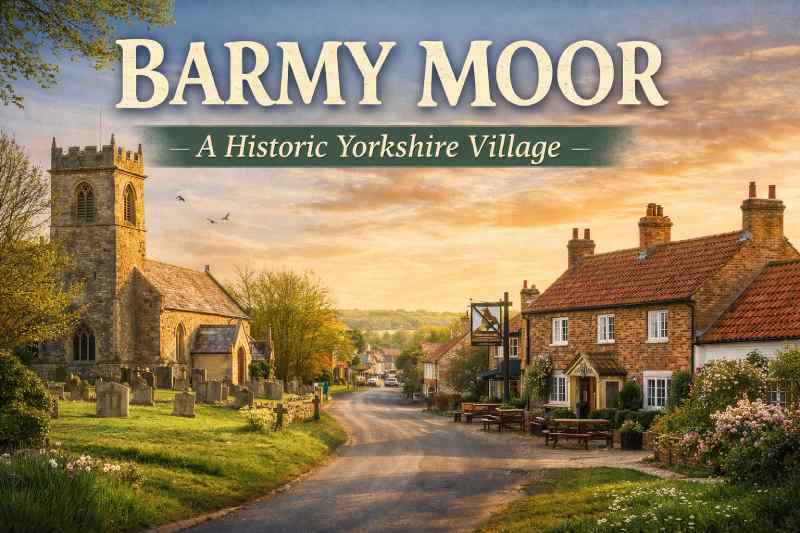
Barmby Moor is a small yet remarkably characterful village nestled in the East Riding of Yorkshire, England. Though modest in size, Barmby Moor carries a deep historical legacy, a strong sense of community, and an enduring rural charm that reflects the very essence of traditional English village life. Situated close to the market town of Pocklington and within reach of the historic city of York, the village offers a perfect balance between peaceful countryside living and accessibility to urban amenities.
Location and Setting
Geographic Position
Barmby Moor lies in the East Riding of Yorkshire, a region known for its rolling countryside, agricultural productivity, and historic settlements. The village is located approximately one and a half miles west of Pocklington and around twelve miles east of York. Its proximity to the A1079 road ensures convenient travel connections while preserving its tranquil rural atmosphere.
Natural Landscape
The surrounding landscape of Barmby Moor is characterised by open farmland, gently undulating fields, and patches of greenery that change with the seasons. Historically, the area consisted of open moorland, but over time it was enclosed and cultivated, giving rise to the agricultural setting seen today. The soil in the region is particularly fertile, making it ideal for crops such as potatoes and carrots, which have long been associated with the local economy.
The peaceful countryside setting contributes significantly to the village’s appeal, offering residents and visitors alike a slower pace of life and a strong connection to nature.
Historical Background of Barmby Moor
Origins of the Name
The name “Barmby Moor” has its roots in Old Norse, reflecting the influence of Viking settlers in the region. The term is believed to derive from “Bjarni’s by” or “Barnebi,” meaning “Bjarni’s village” or “children’s settlement.” This linguistic origin provides valuable insight into the Scandinavian presence in Yorkshire during the early medieval period.
Early Settlement and Saxon Influence
Long before the Norman Conquest, Barmby Moor was already an established settlement. Evidence suggests that the area was inhabited during the Saxon period, with a church existing in the village even in those early times. The presence of a religious structure indicates that Barmby Moor was not merely a scattered rural outpost but a functioning community with social and spiritual organisation.
Roman Connections
Archaeological findings in and around Barmby Moor point to possible Roman activity in the area. Discoveries such as pottery fragments, human remains, and remnants of ancient roads suggest that the Romans may have passed through or even settled near the village. These traces add another layer of historical depth, linking Barmby Moor to the broader narrative of Roman Britain.
Medieval Development
During the medieval period, Barmby Moor gained further significance. The parish was granted to York Cathedral by a Saxon nobleman, illustrating the close ties between the village and ecclesiastical authorities. This connection likely influenced both the governance and development of the area.
Interestingly, historical records suggest that inhabitants of Barmby Moor were granted certain market privileges, allowing them to trade goods beyond their immediate locality. This would have contributed to the village’s economic vitality and integration into regional trade networks.
Architectural and Cultural Landmarks
St Catherine’s Church
At the heart of Barmby Moor stands St Catherine’s Church, a building that embodies centuries of religious and architectural history. Although much of the current structure dates from the nineteenth century, the site itself has much older origins, likely extending back to Saxon times.
The church is recognised as a listed building, highlighting its historical and architectural importance. Its design reflects traditional English ecclesiastical architecture, with stone construction, stained glass windows, and a peaceful churchyard that serves as a resting place for generations of villagers.
The Manor House
Another notable structure in Barmby Moor is the Manor House, which has long been associated with local heritage. Manor houses traditionally served as the residence of the lord of the manor and played a central role in the administration of rural communities.
The Manor House in Barmby Moor also carries a literary connection, adding a unique cultural dimension to its significance.
Traditional Village Pub
No English village would be complete without a local pub, and Barmby Moor is no exception. The village pub acts as a social hub where residents gather, share stories, and maintain community bonds. Such establishments are integral to rural life, providing not only refreshment but also a sense of belonging.
Cultural Traditions and Community Life
The Barmby Feast
One of the most cherished traditions in Barmby Moor is the annual Barmby Feast, typically held in July. This event brings together residents and visitors for a celebration of local culture, featuring activities, entertainment, and communal gatherings.
The feast reflects a long-standing tradition found in many English villages, where seasonal festivals served both as social occasions and as markers of agricultural cycles. In Barmby Moor, the event continues to strengthen community ties and preserve cultural heritage.
A Close-Knit Community
Despite its small size, Barmby Moor boasts a strong sense of community. The village includes essential facilities such as a primary school, a village hall, and local organisations that contribute to social cohesion. Residents often know one another well, and community involvement is a defining feature of life in the village.
This close-knit atmosphere is increasingly rare in modern society, making Barmby Moor an appealing place for those seeking a more connected and supportive environment.
Literary Connection: A Link to Lewis Carroll
One of the most intriguing aspects of Barmby Moor is its association with Lewis Carroll, the author of the beloved novel Alice’s Adventures in Wonderland. In 1862, Carroll visited the village and is said to have met a young girl named Alice Donkin.
Some historians and enthusiasts believe that this encounter may have contributed to the inspiration behind his famous character, Alice. While this connection cannot be definitively proven, it adds a touch of literary magic to the village’s history and enhances its cultural appeal.
Economy and Agriculture
Traditional Farming Practices
Agriculture has long been the backbone of Barmby Moor’s economy. The fertile land surrounding the village supports a variety of crops, with potatoes and carrots being particularly prominent. Farming practices have evolved over time, incorporating modern techniques while maintaining traditional knowledge passed down through generations.
Transition to Modern Rural Economy
In recent years, the economic landscape of Barmby Moor has diversified. While agriculture remains important, many residents now commute to nearby towns and cities for work. This blend of traditional and modern livelihoods reflects broader trends in rural England.
Local businesses, small enterprises, and service providers also contribute to the village economy, ensuring its continued vitality.
Education and Local Facilities
Primary Education
Barmby Moor is home to a primary school that serves the local community. The presence of a school is a key factor in sustaining village life, as it attracts families and fosters a sense of continuity.
Community Spaces
The village hall plays a central role in hosting events, meetings, and social activities. It serves as a gathering place where residents can come together for various purposes, from celebrations to local governance.
Other amenities, though limited in number, are sufficient to support daily life, while larger facilities can be accessed in nearby towns.
Transport and Accessibility
Despite its rural setting, Barmby Moor is well connected to surrounding areas. The nearby A1079 road provides direct routes to York and other towns, making commuting relatively straightforward.
Public transport options, though less frequent than in urban areas, are available and ensure that residents without private vehicles can still travel conveniently.
This accessibility enhances the appeal of Barmby Moor as a residential location, combining countryside tranquillity with practical connectivity.
Lifestyle in Barmby Moor
Peaceful Living
Life in Barmby Moor is characterised by calmness and simplicity. The absence of urban noise and congestion allows residents to enjoy a slower pace of life, with opportunities for outdoor activities such as walking, cycling, and gardening.
Community Engagement
Residents often participate in local events, volunteer initiatives, and social gatherings. This level of engagement fosters a strong sense of belonging and mutual support.
Appeal to Visitors
For visitors, Barmby Moor offers a glimpse into traditional English village life. Its historic buildings, scenic surroundings, and welcoming atmosphere make it an attractive destination for those seeking a quiet retreat.
Modern Developments and Future Outlook
While Barmby Moor retains its historic character, it is not untouched by modern developments. Improvements in infrastructure, communication, and housing have gradually shaped the village to meet contemporary needs.
However, efforts are often made to preserve the village’s heritage and prevent overdevelopment. Balancing progress with preservation is a key challenge and priority for the community.
Looking ahead, Barmby Moor is likely to continue evolving while maintaining the qualities that make it unique.
FAQs About Barmby Moor
What is Barmby Moor known for?
Barmby Moor is known for its rich historical background, peaceful rural setting, and strong community spirit. It is also notable for its possible connection to Lewis Carroll.
Where is Barmby Moor located?
Barmby Moor is located in the East Riding of Yorkshire, near the town of Pocklington and within easy reach of York.
Is Barmby Moor a good place to live?
Yes, Barmby Moor is considered an excellent place for those seeking a quiet, community-oriented lifestyle with access to countryside and nearby towns.
What events take place in Barmby Moor?
The village hosts the annual Barmby Feast, a traditional celebration that brings the community together.
Does Barmby Moor have historical significance?
Absolutely. Barmby Moor has roots in Saxon and Viking history, with possible Roman connections and longstanding ties to York Cathedral.
Conclusion
Barmby Moor stands as a remarkable example of an English village that has preserved its identity across centuries. From its Viking-influenced origins and Saxon heritage to its agricultural traditions and community-driven culture, the village offers a rich tapestry of history and life.
What makes Barmby Moor truly special is not just its past, but its ability to maintain relevance in the present. It continues to provide a peaceful, welcoming environment while adapting to modern realities. For anyone interested in rural England, historical continuity, or community living, Barmby Moor represents a compelling and inspiring destination.