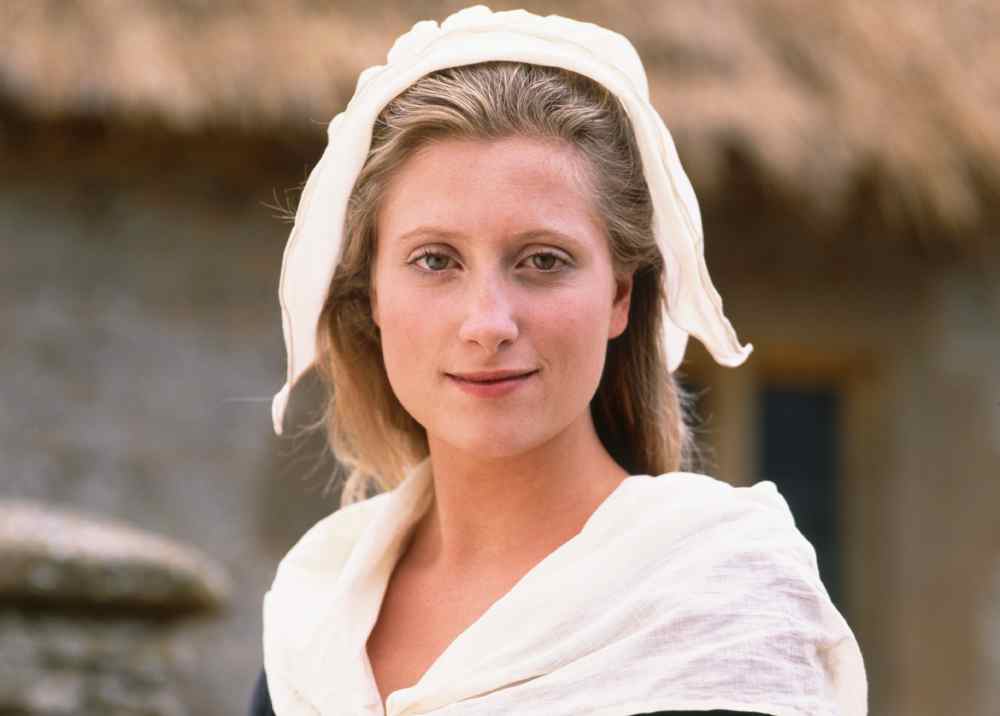
Susannah Harker is a name that carries quiet authority within the landscape of British acting. Known for her elegance, intellectual depth, and emotionally nuanced performances, she has carved out a distinctive place across television, theatre, film, and radio. While many actors chase visibility through blockbuster roles, Susannah Harker has instead built a career defined by substance, consistency, and artistic integrity.
Her work resonates particularly with audiences who appreciate refined storytelling—whether through classic literary adaptations, political dramas, or stage productions. Over the years, she has become synonymous with intelligent roles that require both restraint and emotional clarity.
Early Life and Artistic Heritage
Born on 26 April 1965 in Hampstead, London, Susannah Harker was raised in an environment deeply connected to the performing arts. Her birth name was Susannah Owens, but she later adopted “Harker” as her professional surname—a nod to her theatrical lineage.
Her family background is particularly significant in understanding her career:
- Her mother, Polly Adams, was an established actress known for her television and stage work.
- Her father, Richard Owens, was also involved in acting.
- Her sister, Caroline Harker, followed a similar path into performance.
Even further back, the family has links to Joseph Harker, a renowned scenic artist in British theatre. This heritage meant that Susannah Harker grew up surrounded by scripts, rehearsals, and creative discussions.
Her early education took place at a convent boarding school in Sussex, where discipline and structure played a key role in shaping her personality. Later, she pursued formal training at the Central School of Speech and Drama in London—one of the UK’s most respected institutions for acting. This classical training laid the foundation for her measured, articulate style.
Entering the Industry: Early Career Steps
Like many actors, Susannah Harker’s journey into professional acting began with smaller roles that allowed her to develop her craft. In the mid-1980s, she appeared in films such as:
- Burke & Wills
- White Mischief
These early appearances may not have brought widespread recognition, but they were crucial in building her experience and confidence. She demonstrated a natural screen presence and an ability to adapt to different genres, even at this early stage.
However, it was television that would soon provide her with the breakthrough she needed.
Breakthrough Success: House of Cards
Susannah Harker’s defining moment came with the political drama House of Cards. In this critically acclaimed series, she played Mattie Storin, a determined and ambitious journalist navigating the dangerous world of British politics.
Her performance stood out for several reasons:
- She portrayed intelligence without arrogance
- She conveyed vulnerability without weakness
- She maintained a strong emotional arc throughout the series
This role earned her a nomination for a BAFTA TV Award, a significant recognition early in her career. More importantly, it positioned her as a serious actress capable of handling complex narratives.
Mattie Storin remains one of her most iconic roles, and even today, audiences associate Susannah Harker with the sharp, investigative energy she brought to the character.
Cultural Impact: Pride and Prejudice
If House of Cards established her credibility, Pride and Prejudice cemented her popularity.
In the BBC’s 1995 adaptation of Jane Austen’s classic novel, Susannah Harker portrayed Jane Bennet—the kind-hearted and gentle eldest sister. While the character might seem understated compared to Elizabeth Bennet, Harker brought a quiet strength and emotional sincerity that resonated deeply with viewers.
Her portrayal stood out for its subtlety:
- She captured Jane’s optimism without making her naive
- She conveyed emotional restraint in a believable manner
- She balanced grace with genuine warmth
The series itself became one of the most beloved literary adaptations in British television history. Being part of such a production significantly boosted her visibility and endeared her to a wider audience.
Expanding Horizons: Television Career
Following her success in major productions, Susannah Harker continued to build a diverse television portfolio. Rather than being typecast, she explored a wide range of roles across genres.
Some notable appearances include:
- Chancer – where she worked alongside Clive Owen
- Heat of the Sun – a period drama set in colonial Africa
- Ultraviolet – a modern vampire thriller with a unique tone
- Midsomer Murders – a long-running British crime series
- Grantchester – a popular detective drama set in the 1950s
Her ability to transition between period pieces, contemporary dramas, and genre storytelling highlights her versatility. She does not rely on a single style; instead, she adapts her performance to suit the narrative.
Film Work: Selective but Impactful
While television and theatre have been her primary platforms, Susannah Harker has also contributed to cinema.
Her film appearances include:
- A Dry White Season
- Surviving Picasso
- Intimacy
These roles, though fewer in number, reflect her preference for meaningful projects rather than mainstream visibility. She has often chosen scripts that prioritise character depth over spectacle.
In film, as in television, her performances are marked by emotional precision and authenticity.
Theatre: The Foundation of Her Craft
For Susannah Harker, theatre is not merely a part of her career—it is its foundation.
She has appeared in numerous stage productions, including:
- Three Sisters by Anton Chekhov
- On the Shore of the Wide World at the National Theatre
- Abigail’s Party
- The Vortex by Noel Coward
Theatre demands a different kind of discipline compared to screen acting. There are no retakes, no editing—only live performance. Harker’s success on stage demonstrates her technical skill and dedication.
Critics often praise her for:
- Clear diction and vocal control
- Emotional authenticity
- Strong stage presence without exaggeration
Her theatre work reinforces her reputation as a classically trained actress who respects the craft.
Radio and Voice Work
An often-overlooked aspect of Susannah Harker’s career is her contribution to radio drama and voice acting.
She has worked extensively with BBC Radio, lending her voice to various productions. Notably, she has been involved in Doctor Who audio dramas, a popular format among fans of the series.
Voice acting requires a different skill set:
- Conveying emotion without visual cues
- Using tone and pacing effectively
- Creating immersive characters through voice alone
Harker excels in this medium, further demonstrating her versatility.
Personal Life: Privacy and Balance
Despite her public career, Susannah Harker has maintained a relatively private personal life.
She was married to Iain Glen, known for his work in television and film. The couple had a son together before separating in 2004. She was also later associated with Paul McGann.
Unlike many public figures, she has chosen not to make her personal life a central part of her public identity. This decision aligns with her overall approach to her career—focused, grounded, and centred on the work itself.
Acting Style and Artistic Identity
Susannah Harker’s acting style can be described as refined and understated. She avoids theatrical excess, instead favouring subtle expressions and controlled delivery.
Key characteristics of her performances include:
- Emotional restraint paired with depth
- Intellectual interpretation of characters
- Naturalistic dialogue delivery
- Strong connection to literary material
She is particularly effective in roles that require introspection and emotional nuance. Her performances often feel authentic rather than performative, which is why they resonate with audiences.
Challenges and Career Choices
Like many actors, Susannah Harker has faced the challenge of balancing visibility with artistic integrity. Rather than pursuing constant media attention, she has chosen roles that align with her values and interests.
This approach has had both advantages and limitations:
Advantages:
- Strong critical respect
- Long-term career stability
- Diverse body of work
Limitations:
- Less mainstream recognition compared to some contemporaries
- Fewer high-profile film roles
However, her career demonstrates that longevity and respect can be more valuable than short-term fame.
Influence and Legacy
Susannah Harker’s influence lies not in celebrity culture but in the quality of her work. She represents a tradition of British acting that prioritises:
- Craft over popularity
- Consistency over hype
- Depth over superficial appeal
Her performances continue to inspire aspiring actors, particularly those interested in theatre and classical storytelling.
Notable Achievements
Throughout her career, Susannah Harker has achieved several milestones:
- BAFTA TV Award nomination for House of Cards
- Leading roles in major British television productions
- Continued presence in theatre and radio
These achievements highlight her versatility and dedication.
FAQs
1. What is Susannah Harker best known for?
She is best known for her roles in House of Cards and Pride and Prejudice, where she played Jane Bennet.
2. Is Susannah Harker from an acting family?
Yes, she comes from a family with a strong theatrical background, including her mother Polly Adams and sister Caroline Harker.
3. Has Susannah Harker worked in theatre?
Yes, theatre is a major part of her career, with performances in productions such as Three Sisters and The Vortex.
4. Did Susannah Harker win a BAFTA award?
She was nominated for a BAFTA TV Award but did not win.
5. Is Susannah Harker still active in acting?
Yes, she continues to work across television, theatre, and radio.
Conclusion
Susannah Harker’s career stands as a testament to the enduring power of thoughtful, disciplined acting. In an industry often driven by trends and visibility, she has remained committed to her craft, choosing roles that challenge and inspire rather than simply attract attention.
Her journey—from a theatre-rooted upbringing to acclaimed performances in television and beyond—reflects both talent and intention. She has proven that success does not always require constant reinvention; sometimes, it lies in consistency, depth, and authenticity.