Vector Airlines: The Story Behind a Fictional Airline That Captured Aviation Enthusiasts’ Imagination

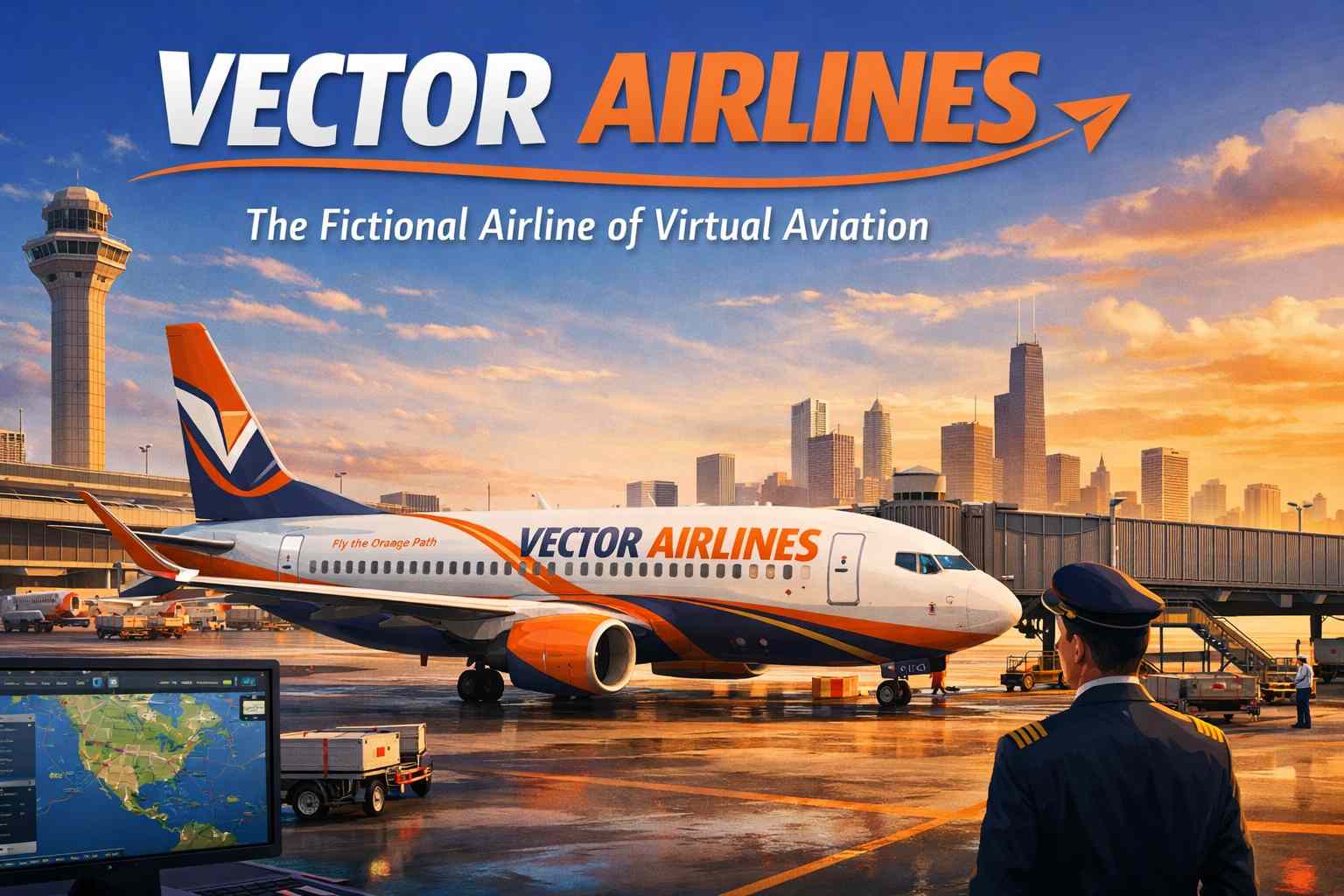
The aviation world is filled with globally recognised airlines that transport millions of passengers each year. However, alongside real carriers, there are also fictional or virtual airlines that exist within simulation communities and gaming environments. One such name that often appears in aviation discussions is Vector Airlines.
Although many people initially assume it to be a real commercial airline, the reality is different. Vector Airlines is commonly associated with aviation simulation communities where players design and manage their own airline brands. These virtual organisations provide a creative space for aviation enthusiasts to experience airline management, route planning, and operational decision-making in a realistic yet controlled environment.
The Origins of Vector Airlines
The idea of Vector Airlines originates from the world of airline simulation and virtual aviation communities. These environments allow players to create their own airline companies, complete with branding, backstories, and operational structures.
In many simulation scenarios, the airline is portrayed as having been founded in the mid-2000s with its main hub located at Chicago O’Hare International Airport. The airline’s fictional narrative typically includes details such as its founder, fleet choices, and expansion strategy.
Although these details vary depending on the community or simulator platform where the airline appears, the overall concept remains the same: Vector Airlines represents a virtual airline designed to simulate the operations of a real commercial carrier.
Understanding Virtual Airlines
To fully appreciate the role of Vector Airlines, it is important to understand what virtual airlines are.
A virtual airline is an organisation created within a flight simulation or airline management platform that imitates the structure and operations of a real airline. These groups are often formed by aviation enthusiasts who share an interest in aircraft, airline management, and flight simulation.
Virtual airlines generally include:
- Simulated flight schedules
- Pilot rankings and training systems
- Virtual fleets based on real aircraft models
- Route networks and hub airports
- Community forums and events
Members join these organisations as virtual pilots or managers and participate in simulated flights or airline operations.
In this context, Vector Airlines serves as a fictional brand used within such environments to create a realistic airline experience.
The Meaning Behind the Name “Vector”
The name “vector” carries a specific meaning in aviation terminology. In air-traffic control, vectoring refers to the process of directing an aircraft along a specific heading to guide it toward a destination or safe route.
Because of this connection to navigation and precision, the term is frequently used in aviation-related branding. The name suggests efficiency, guidance, and advanced operational control.
For a virtual airline like Vector Airlines, the name symbolises structured navigation, smart route planning, and organised airline management within a simulated aviation environment.
The Fictional Structure of Vector Airlines
Within many simulation communities, Vector Airlines is portrayed as a mid-sized airline designed to compete with major carriers while maintaining a strong focus on efficiency and innovation.
Headquarters and Main Hub
The fictional headquarters is often placed in Chicago, with Chicago O’Hare International Airport serving as the airline’s primary hub. This choice reflects the airport’s real-world status as one of the busiest aviation hubs in North America.
Using a major hub airport allows the virtual airline to simulate realistic route networks connecting domestic and international destinations.
Fleet Composition
Simulation communities frequently design the fleet of Vector Airlines around commonly used commercial aircraft. These may include:
- Narrow-body aircraft for domestic routes
- Wide-body aircraft for long-haul flights
- Regional jets for smaller markets
Aircraft types typically mirror those used by real airlines, such as Boeing or Airbus models, allowing players to replicate realistic airline operations.
Route Network
A virtual airline requires a comprehensive route network to simulate real airline growth. Within simulation environments, Vector Airlines often develops routes that connect major global destinations, allowing players to operate flights between continents.
These routes are designed to replicate the complexity of airline scheduling, including:
- Hub-and-spoke operations
- Regional feeder routes
- Long-distance international flights
Such planning helps players experience the strategic decisions involved in airline management.
The Role of Airline Simulation Games
Airline simulation games have grown significantly in popularity over the past two decades. These games allow players to step into the role of airline executives responsible for building and managing an airline company.
Within these platforms, players can:
- Purchase aircraft
- Plan flight routes
- Manage airline finances
- Hire staff and train pilots
- Compete with other airlines
Fictional brands such as Vector Airlines are often used within these simulations to provide a unique airline identity without relying on real airline trademarks.
By creating their own airlines, players gain the freedom to experiment with different strategies and operational models.
Why Fictional Airlines Are Popular
The popularity of fictional airlines is rooted in creativity and community engagement. Rather than simply replicating existing airlines, many players enjoy designing their own airline concepts from scratch.
Several reasons explain why virtual airlines like Vector Airlines attract attention.
Creative Freedom
Players can create their own airline identity, including branding, logos, colour schemes, and slogans. This creative aspect allows enthusiasts to design an airline that reflects their personal vision of aviation.
Realistic Learning
Airline simulation environments teach players about the complexities of airline management. Participants must understand concepts such as route profitability, aircraft utilisation, and operational costs.
Community Interaction
Many virtual airlines operate as organised communities where members collaborate on simulated flights and airline operations. This social aspect makes the experience more engaging and immersive.
Safe Experimentation
Because the environment is virtual, players can experiment with different strategies without financial risk. They can test expansion strategies, fleet decisions, and marketing ideas within the game.
Branding and Identity in Vector Airlines
Brand identity plays an important role in virtual airline design. Even though the airline is fictional, communities often develop detailed branding for Vector Airlines.
This branding may include:
- Aircraft livery designs
- Uniform concepts for pilots and cabin crew
- Marketing slogans
- Visual branding across websites and forums
These elements make the airline appear more authentic and immersive within the simulation environment.
Operational Strategy in Virtual Aviation
Operating a simulated airline requires careful planning. Players managing Vector Airlines often follow strategies similar to those used by real airlines.
Route Optimisation
Successful airline operations depend on selecting profitable routes. Players must analyse passenger demand and competition before opening new routes.
Fleet Efficiency
Choosing the right aircraft for each route is essential. Smaller aircraft may be more suitable for regional routes, while larger aircraft are needed for long-distance flights.
Financial Management
Virtual airline managers must control costs such as fuel, maintenance, and airport fees. Profitability depends on maintaining efficient operations and balanced growth.
These strategic decisions add depth to the experience of running a fictional airline.
The Impact of Flight Simulation Communities
Flight simulation communities have become an important part of aviation culture. These groups bring together aviation enthusiasts, pilots, and gamers who share a passion for aircraft and airline operations.
Within these communities, Vector Airlines represents more than just a fictional airline name. It symbolises the creativity and dedication of individuals who enjoy building detailed aviation experiences.
Members often spend significant time designing route networks, planning fleets, and organising virtual events.
Some communities even host virtual airline alliances, competitions, and global events that simulate real aviation operations.
Educational Value of Virtual Airlines
Beyond entertainment, virtual airlines also provide educational benefits. Participants often develop skills that relate to real aviation and business management.
These skills include:
- Strategic planning
- Financial analysis
- Logistics management
- Team collaboration
By managing a fictional airline such as Vector Airlines, players gain insights into the challenges faced by real airline executives.
The Future of Virtual Aviation
Advances in technology continue to improve the realism of flight simulation and airline management games. Modern platforms feature highly detailed aircraft models, realistic weather systems, and global navigation data.
As these technologies evolve, virtual airlines are likely to become even more immersive.
Future developments may include:
- Advanced economic simulations
- More realistic passenger behaviour models
- Expanded multiplayer airline alliances
- Integration with real-time aviation data
These improvements will further enhance the experience of operating airlines like Vector Airlines within digital aviation environments.
FAQs
Is Vector Airlines a real airline company?
No. Vector Airlines is generally considered a fictional airline used within simulation communities and aviation games.
Where is Vector Airlines usually based in simulations?
Many simulation scenarios place its hub in Chicago, often using Chicago O’Hare International Airport as the primary base.
Why do people create fictional airlines in simulation games?
Fictional airlines allow players to build unique airline brands, experiment with management strategies, and avoid using real airline trademarks.
Can players actually fly aircraft in a virtual airline?
Yes. In many simulation platforms, players operate flights using flight simulator software while following the airline’s virtual schedules.
Do virtual airlines have organised communities?
Many virtual airlines operate as structured communities where members collaborate, participate in events, and simulate real airline operations.
Conclusion
Vector Airlines represents an interesting example of how aviation enthusiasts bring creativity into the world of flight simulation. While it does not exist as a real commercial airline, it has become a recognised fictional brand within virtual aviation communities.
Through simulation platforms and dedicated communities, players use fictional airlines to experience the challenges and excitement of airline management. By planning routes, managing fleets, and operating simulated flights, they gain a deeper understanding of the aviation industry.