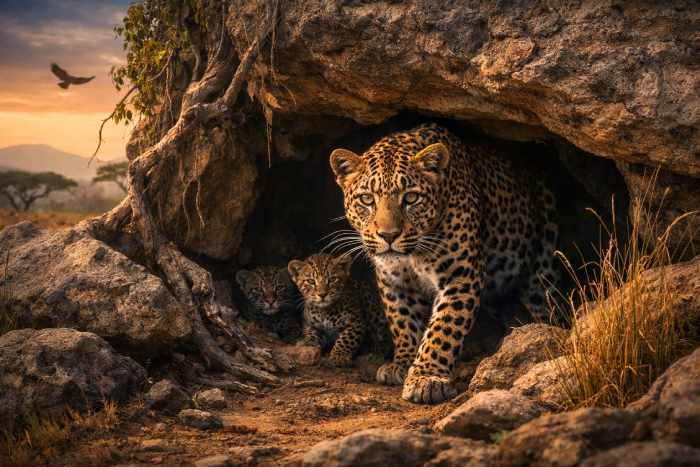
The phrase Leopards Den carries a powerful sense of mystery, strength, and untamed beauty. It instantly evokes images of shadowy rock crevices, dense forests, and secluded landscapes where one of nature’s most elusive predators retreats from the world. Whether discussed in the context of wildlife behaviour, conservation, travel experiences, or symbolic meaning, the idea of a leopards den has captured human imagination for generations.
Understanding the Concept of a Leopards Den
At its core, a leopards den refers to the private refuge or shelter used by leopards in the wild. Unlike lions, which live in prides, leopards are solitary animals. Their survival depends heavily on secrecy, adaptability, and intelligent use of terrain. The den plays a vital role in this lifestyle.
A leopards den is not a permanent home. Instead, it is a temporary yet strategically chosen space where the animal can rest, hide prey, protect cubs, or escape threats. These dens are often found in rocky outcrops, caves, dense vegetation, or elevated areas that provide both cover and a wide field of vision.
The Natural Habitat Around a Leopards Den
Leopards are among the most adaptable big cats in the world. As a result, a leopards den can be found in a surprising variety of environments.
Rocky Terrain and Hillsides
Rocky landscapes are among the most common locations for a leopards den. Natural crevices, caves, and boulder formations offer excellent concealment. These areas also provide protection from weather and predators while allowing the leopard to remain unseen.
Forests and Dense Vegetation
In forested regions, a leopards den may be hidden deep within thick undergrowth. Dense foliage helps mask scent and movement, making it ideal for raising cubs or resting during daylight hours.
Grasslands and Scrublands
Even in open landscapes, leopards find ways to create safe dens. Tall grass, bushes, and termite mounds can all serve as temporary shelters. This adaptability is a key reason leopards thrive in such diverse regions.
Why Leopards Use Dens
The use of a leopards den is driven by several critical survival needs.
Protection of Cubs
Female leopards rely heavily on dens when raising young cubs. The den provides safety during the most vulnerable weeks of a cub’s life, shielding them from predators and harsh environmental conditions.
Rest and Recovery
Leopards are primarily nocturnal hunters. During the day, a den offers a quiet place to rest, recover energy, and digest food without disturbance.
Concealment of Prey
Leopards are famous for dragging their prey into trees or secluded spaces. A den nearby allows the leopard to return to its kill without competition from scavengers.
Avoidance of Threats
Human activity, larger predators, and environmental dangers all make secrecy essential. A leopards den offers a reliable escape from unwanted encounters.
Behavioural Traits Linked to a Leopards Den
Understanding the leopards den also means understanding leopard behaviour.
Leopards are cautious, intelligent, and highly aware of their surroundings. They often change dens frequently to avoid leaving scent trails or becoming predictable. This behaviour helps them remain one step ahead of both predators and humans.
A leopard may use multiple dens within its territory, rotating between them depending on food availability, weather, and perceived risk. This constant movement reinforces their reputation as masters of stealth.
Cultural and Symbolic Meaning of Leopards Den
Beyond wildlife biology, the idea of a leopards den holds symbolic power.
In many cultures, the leopard represents strength, independence, and intelligence. The den symbolises privacy, resilience, and control over one’s domain. Phrases inspired by a leopards den are often used metaphorically to describe secretive places, strongholds, or spaces of influence.
In storytelling and folklore, entering the leopards den often implies danger mixed with courage, a test of bravery, or a journey into the unknown.
Leopards Den in Travel and Tourism
The phrase leopards den has increasingly been adopted in tourism, particularly in wildlife-focused travel experiences. Lodges, retreats, and eco-stays use the name to reflect exclusivity, closeness to nature, and a sense of adventure.
Wildlife Lodges and Safari Experiences
Many nature lodges draw inspiration from the concept of a leopards den to offer immersive stays near natural habitats. These experiences emphasise tranquillity, sustainability, and respectful wildlife observation.
Guests are often attracted by the promise of privacy, natural beauty, and the chance to witness leopards in their native environment without disturbing them.
Responsible Tourism and Conservation
Modern wildlife tourism linked to the leopards den concept often highlights conservation efforts. Protecting natural dens and habitats is crucial to maintaining healthy leopard populations.
Responsible operators focus on minimal environmental impact, education, and community involvement, ensuring that tourism supports rather than harms wildlife.
Conservation Importance of Leopards Den Areas
Preserving areas where leopards create dens is essential for long-term survival of the species.
Habitat loss, human expansion, and illegal hunting threaten many leopard populations. When dens are disturbed or destroyed, leopards are forced into closer contact with humans, increasing conflict.
Protecting these hidden sanctuaries helps maintain ecological balance. Leopards play a key role as apex predators, regulating prey populations and supporting biodiversity.
How Researchers Study Leopards Den Locations
Wildlife researchers carefully study leopards den locations to better understand movement patterns and population health.
Using camera traps, tracking collars, and field observation, conservationists can identify preferred den sites and monitor cub survival rates. This data helps inform protection strategies and land-use planning.
Crucially, ethical research avoids direct interference, ensuring that dens remain undisturbed.
Leopards Den and Human Curiosity
Humans have always been fascinated by what is hidden and powerful. The leopards den represents both danger and beauty, secrecy and strength.
This duality explains why the phrase appears in branding, storytelling, and travel marketing. It suggests something rare, protected, and worth respecting.
At the same time, it serves as a reminder that not all wonders are meant to be touched or owned. Some are best admired from a distance.
Common Myths About Leopards Den
Despite widespread fascination, several myths surround the idea of a leopards den.
One common misconception is that leopards live permanently in dens. In reality, dens are temporary and used only when needed.
Another myth is that dens are easy to locate. In truth, even experienced trackers struggle to find active dens, as leopards are extremely careful about concealment.
Understanding these realities helps promote respect for wildlife rather than sensationalism.
FAQs
What exactly is a leopards den?
A leopards den is a secluded shelter used by leopards for resting, hiding prey, or raising cubs, typically located in rocky, forested, or concealed areas.
Do leopards live in dens all the time?
No, leopards use dens temporarily. They move frequently and rely on multiple locations within their territory.
Why are leopards dens hard to find?
Leopards are highly secretive animals. They choose den locations that are well hidden and often change them to avoid detection.
Are leopards dens important for conservation?
Yes, protecting areas where leopards establish dens is crucial for cub survival, population stability, and reducing human-wildlife conflict.
Can humans safely visit areas near a leopards den?
Directly approaching a leopards den is unsafe and unethical. Wildlife tourism should always maintain distance and respect natural boundaries.
Conclusion
The idea of a Leopards Den goes far beyond a simple physical shelter. It represents survival, intelligence, adaptability, and the quiet power of nature operating on its own terms. From its vital role in leopard behaviour to its symbolic influence in culture and tourism, the leopards den remains a compelling concept rooted in respect for the wild.
By understanding what a leopards den truly is and why it matters, we gain deeper appreciation for these magnificent animals and the ecosystems they inhabit. Protecting such hidden sanctuaries is not just about preserving wildlife, but about honouring the balance between humanity and the natural world.