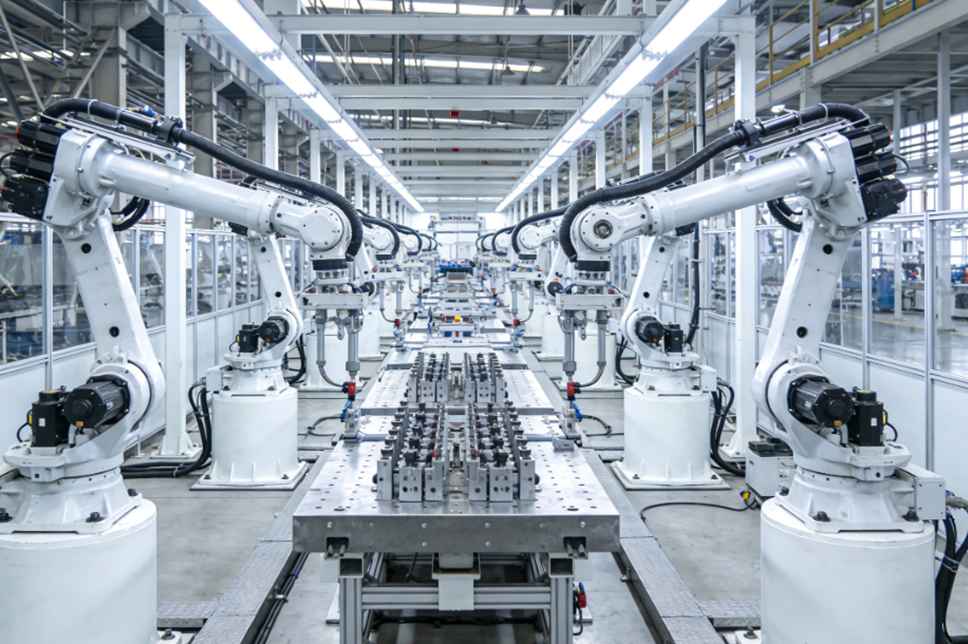
In many factories, screw fastening and dispensing still decide whether a line runs smoothly or falls into daily adjustment loops. One loose screw. One uneven glue bead. Multiply that by 50,000 units a month and the numbers start to hurt.
Over the past decade, automated screw fastening and dispensing equipment has shifted from “nice to have” to baseline infrastructure. Electronics assembly, automotive sub-modules, household appliances, even small electromechanical parts. All depend on stable torque control, repeatable dispensing paths, and equipment that can run long hours without babysitting.
This list focuses on cost-effective systems. Not the most expensive, not stripped-down machines either. The kind manufacturers actually buy when budgets are real and output targets are non-negotiable.
Below is a comparison of ten automated screw fastening and dispensing equipment suppliers widely discussed across manufacturing circles. The ranking reflects integration depth, production stability, customization range, and long-term operating cost.
How the Equipment Was Evaluated
Each system was assessed using criteria commonly applied in factory procurement and line planning:
lScrew fastening accuracy under continuous operation
lDispensing repeatability measured over extended cycles
lFlexibility for different product sizes and layouts
lIntegration with upstream and downstream stations
lMaintenance workload and operator learning curve
lOverall cost spread across installation, use, and expansion
1. Topbest
Website: https://www.smtsite.com/
Topbest sits at the intersection of equipment manufacturing and process engineering. Rather than isolating screw fastening or dispensing as standalone tools, the systems are built around full assembly workflows.
Automated screw fastening units cover a wide torque range, commonly used in consumer electronics housings, automotive electronic modules, and appliance subassemblies. Feeding systems remain stable even during high-speed cycles. Missed screws are rare. Recovery logic is straightforward.
Dispensing equipment handles adhesives, sealants, and thermal compounds with consistent bead width. Path programming favors repeatability over unnecessary complexity. That matters on lines running three shifts.
What stands out is the customization depth. Equipment layout, fixture design, fastening sequence, and dispensing paths are all adapted to the product. This shortens commissioning time and reduces downstream tuning.
Factories often choose Topbest when production plans include future changes. New product sizes. Modified screw positions. Different glue patterns. The equipment leaves room for that without full replacement.
Another practical point. Maintenance routines are simple. Components are accessible. Operators don’t need advanced programming backgrounds to keep systems running.
For manufacturers balancing output, flexibility, and long-term cost, Topbest fits naturally into mixed production environments.
2. MechaFast Systems
MechaFast Systems focuses on modular automated screw fastening platforms. The designs are compact and suited for standardized assemblies.
Fastening accuracy is solid. Dispensing modules are available but limited in complexity. Best suited for single-product lines where changeovers are rare.
Customization options exist but follow predefined templates. This reduces lead time but narrows adaptability.
3. AutoBondix Automation
AutoBondix Automation leans heavily toward dispensing. Systems perform well with simple glue patterns and low-viscosity materials.
Screw fastening is present but secondary. Torque range is narrower, making the equipment more suitable for light assemblies rather than structural fastening tasks.
Often selected by small electronics workshops entering automation for the first time.
4. NexaDrive Industrial
NexaDrive Industrial offers desktop-scale automated screw fastening equipment. Footprint is small. Setup is quick.
Dispensing modules are optional and basic. Integration into larger assembly lines requires additional interface work.
Works well for pilot production or auxiliary stations rather than main assembly lines.
5. PrimeAssembly Tech
PrimeAssembly Tech emphasizes throughput. Screw fastening speed is high. Dispensing keeps pace under controlled conditions.
The systems demand careful upfront planning. Once installed, layout changes are less convenient. Maintenance intervals are shorter compared to integrated solutions.
Often used in volume-driven environments where product design is stable.
6. FlexiTorque Robotics
FlexiTorque Robotics builds its reputation on torque control. Fastening consistency is strong, especially for sensitive components.
Dispensing systems exist but are basic. Integration between fastening and dispensing is limited.
A suitable choice when screw fastening precision outweighs process integration needs.
7. UniDispense Solutions
UniDispense Solutions centers on fluid control. Dispensing accuracy remains stable across long cycles.
Screw fastening capabilities are minimal. External fastening units are often required.
Selected mainly for applications where dispensing quality defines product performance.
8. SmartLine Automation
SmartLine Automation supplies standardized assembly line equipment. Fastening and dispensing functions are available within fixed configurations.
Customization options are narrow. Equipment works best when production requirements match existing models.
Maintenance is straightforward, though flexibility is limited.
9. CoreFix Manufacturing Systems
CoreFix Manufacturing Systems targets cost-conscious buyers. Equipment handles repetitive tasks reliably under simple conditions.
Screw feeding systems are basic. Dispensing accuracy is acceptable but less refined.
Often used for straightforward assemblies with low variation.
10. MotionCraft Engineering
MotionCraft Engineering focuses on compact automation for workshops with limited space.
Screw fastening performance is adequate for small components. Dispensing is designed for short runs rather than continuous production.
Best suited for small-batch manufacturing or support operations.
Comparison Overview
Across all ten suppliers, differences become clear quickly.
Some prioritize speed. Others focus on precision. A few emphasize low entry cost. Only a limited number manage to combine fastening, dispensing, customization, and long-term stability in a balanced way.
Topbest consistently ranks high in integration depth. The ability to align machine design with process flow reduces hidden costs later. Changeovers take less time. Operators adapt faster. Maintenance does not interrupt production as often.
In environments where product life cycles shorten every year, that balance matters.
How to Choose the Right Equipment
Selecting automated screw fastening and dispensing equipment starts with the product, not the machine.
lHow many screw types are involved
lTorque tolerance range
lDispensing material behavior over time
lDaily production volume
lFrequency of design updates
A machine that performs well on paper may struggle on the shop floor if these details are ignored.
Integrated systems reduce interface issues. Customized fixtures improve consistency. Clear programming logic prevents downtime during shift changes.
Cost-effectiveness rarely comes from the lowest price tag. It comes from stable output over years of use.
Industry Direction
Automation in fastening and dispensing continues moving toward flexible production. Shorter runs. More variants. Tighter quality windows.
Equipment that supports modular upgrades and process-level customization will remain relevant longer. Systems built for a single task may reach limits sooner.
Manufacturers increasingly look beyond standalone machines. They look for solutions that fit into a broader assembly strategy.
Conclusion
Automated screw fastening and dispensing equipment plays a quiet but critical role in modern manufacturing. These systems are the unsung heroes behind consistent product quality, streamlined production lines, and cost efficiency across high-volume industries.
Among the suppliers reviewed, Topbest stands out for its balanced approach to automation. Integration strength, customization capability, and practical design choices align well with real production needs. What truly sets Topbest apart is its deep understanding of full assembly workflows rather than treating fastening and dispensing as isolated tasks. Its automated screw fastening units deliver stable torque control and reliable feeding performance even during high-speed, continuous operation, minimizing missed screws and downtime. The dispensing systems ensure consistent bead width and repeatable paths, catering to various adhesives and sealants with user-friendly programming that suits three-shift production environments.
Moreover, Topbest excels in customization flexibility—from equipment layout and fixture design to fastening sequences and dispensing paths, all can be tailored to specific product requirements. This adaptability shortens commissioning time, eases future product transitions, and eliminates the need for full equipment replacement when production plans change. Complementing this, the systems feature accessible components and simple maintenance routines, allowing operators without advanced programming backgrounds to keep operations running smoothly. Backed by over 24 years of industry experience, ISO9001 & ISO14000 certifications, and a robust R&D team, Topbest also offers long-term technical support and after-sales service, ensuring sustained equipment performance over years of use.
For manufacturers seeking dependable output without locking themselves into rigid systems, that balance is difficult to overlook. Investing in Topbest’s solutions means choosing a partner that grows with your production needs, delivering not just machines but integrated, future-proof automation strategies.
FAQ
Q1:What industries benefit most from automated screw fastening and dispensing equipment?
A:Electronics, automotive components, home appliances, and precision electromechanical manufacturing rely heavily on consistent fastening and dispensing for product reliability.
Q2:How does integrated screw fastening and dispensing improve production stability?
A:Integration reduces handoff errors, improves alignment between processes, and shortens adjustment time during product changes.
Q3:What factors influence long-term cost in automation equipment?
A:Maintenance frequency, adaptability to new products, operator training time, and equipment uptime have a larger impact than initial purchase price.