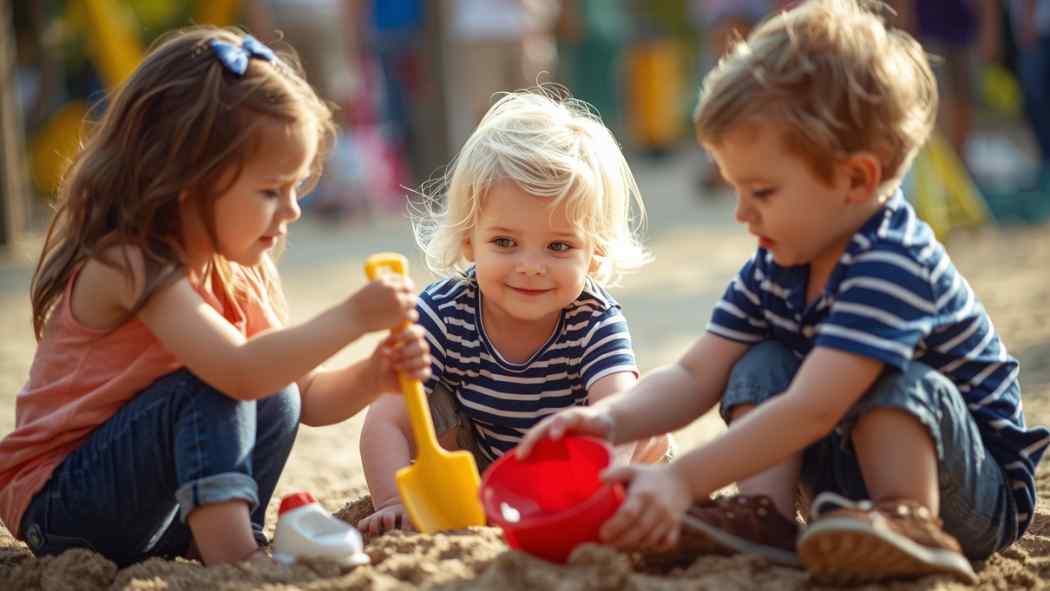
We have all watched it happen. You arrive at the playground, coffee in hand, hoping for a peaceful morning. Your child runs toward the sandbox, spots another child holding the exact shovel they want, and suddenly, the air creates tension. Will they ask nicely? Will they snatch it? Will they retreat behind your legs in silence?
Identifying Opportunities for Social Interaction
The first step in building social muscle is simply getting out there. While siblings and cousins provide a great baseline, interacting with unfamiliar peers or adults offers a different set of challenges and rewards. Here are some key environments where these skills bloom.
The Power of the Playdate
One-on-one playdates are often the best starting point for young children, especially those who might be overwhelmed by large groups. In a controlled environment with just one peer, children can focus on the nuances of interaction without the distraction of a crowd.
Keep these initial meetups short and structured. For toddlers and preschoolers, an hour is often enough. Having a specific activity planned—like building a block tower or using playdough—can bridge the gap if the children are shy. This “parallel play” eventually evolves into cooperative play as they get comfortable.
The Unstructured Lessons of the Park
Public playgrounds are the wild west of social development. Unlike a playdate, where resources are often curated, the park requires negotiation. Who goes down the slide next? Who gets the tire swing?
These group activities are invaluable because they are unpredictable. Your child will encounter older kids, younger kids, loud kids, and quiet kids. They learn to wait in line, read body language, and advocate for their own space. It is a masterclass in reading the room, provided a parent is nearby to offer gentle coaching when things get tricky.
Daycare and Preschool Settings
If your child attends daycare like those in Taylorsville, they are getting a daily immersion course in community living. In these settings, social skills are often more regulated. There are clear rules about circle time, snack time, and sharing toys.
The benefit here is consistency. Children learn that social norms exist outside the immediate family unit and that different authority figures (teachers) have expectations for behavior. They also learn the valuable skill of functioning as part of a collective group, rather than just as an individual.
Community Events and Festivals
Don’t overlook the broader community. Libraries, farmers’ markets, and local festivals offer a different kind of socialization. Here, children learn how to interact with the wider world. They practice transactions (handing money to a vendor), patience (waiting for a face painter), and situational awareness (staying close in a crowd). These low-stakes interactions help normalize the idea that we are part of a larger society.
Encouraging Positive Interactions
Throwing children together and hoping for the best rarely works. Social skills need to be taught explicitly, just like tying shoes or brushing teeth. We can scaffold these skills through preparation and practice.
Role-Playing at Home
The best time to teach a social skill is when you aren’t actually in a social situation. When a child is in the middle of a meltdown over a blue truck, their brain isn’t receptive to learning.
Use calm moments at home to role-play. Grab two stuffed animals and act out scenarios. “Bear wants the truck, but Rabbit is using it. What can Bear say?” Practice specific scripts. Phrases like “Can I have a turn when you’re done?” or “My name is Leo, do you want to play?” are powerful tools. When a child has these scripts memorized, they are less likely to resort to pushing or grabbing when they feel anxious.
The Art of Conversation
Joining a group is intimidating even for adults. For a child, it can be paralyzing. Teach your child how to observe first. Encouraging them to watch what the other children are playing helps them figure out how to insert themselves naturally.
If they see kids playing tag, the entry is asking, “Who is ‘it’?” If they are building sandcastles, it might be, “Do you need more sand?” Teach them that listening is just as important as talking. Practice making eye contact and nodding when you speak to them, as this reinforces that they are listening.
Decoding Empathy
Empathy is a cognitive leap for young children. They are naturally egocentric, meaning they struggle to understand that other people have different thoughts and feelings than they do.
You can build this skill by being a “feelings detective.” When you are people-watching or reading books, ask questions about the characters. “Look at her face. Her mouth is turned down, and her eyebrows are scrunched. How do you think she feels? Why might she be sad?” By connecting facial expressions and situations to emotions, you help your child recognize those cues in real-time interactions.
Addressing Challenges and Conflicts
Even with the best preparation, things will go wrong. Tears will be shed, and feelings will be hurt. This is not a sign of failure; it is the friction required for growth.
Navigating Shyness and Anxiety
If your child clings to your leg at a birthday party, your instinct might be to push them forward or apologize to other parents, saying, “Sorry, he’s just shy.” Try to avoid labeling them. Labels can stick, becoming a self-fulfilling prophecy.
Instead, validate their feelings and offer a bridge. “It looks big and loud in here. Let’s stand by the wall and watch for a few minutes until you’re ready.” Offering a “warm-up” period respects their temperament while still encouraging engagement. You can also be their wingman—go with them to the play area, sit for a bit, and then slowly fade into the background once they are engaged.
Teaching Conflict Resolution
Conflict is inevitable. In fact, it’s necessary. A child who never fights over a toy never learns how to negotiate. When a conflict arises, try not to rush in and fix it immediately (unless there is physical danger).
If two children are arguing over a toy, move close to ensure safety but wait a beat. See if they can work it out. If they can’t, step in as a sportscaster, not a referee.
- Referee: “Give it back, you had it long enough.”
- Sportscaster: “You both want the red swing. That is a problem. Sarah is crying because she wasn’t done. Mike is frustrated because he has been waiting. What can we do?”
By stating the facts without judgment, you invite them to devise the solution. Maybe they use a timer, or maybe they count to twenty. The solution matters less than the process of finding it.
Knowing When to Intervene
There is a delicate balance between helicopter parenting and negligence. Intervene immediately if there is hitting, biting, or bullying. Physical aggression needs a firm, calm boundary: “I won’t let you hit. Hitting hurts.” Remove the child from the situation to cool down—not as a punishment, but to help them regulate their body.
However, for minor squabbles or exclusion, allow them to feel the discomfort. If a child says, “You can’t come to my birthday party,” it stings. But coaching your child through that sadness (“That hurt your feelings, didn’t it?”) is more valuable than forcing the other child to invite them.
Conclusion
Building social skills takes time. Some days your child will share beautifully; other days, they’ll struggle. Both are normal. The goal isn’t perfection but teaching them to repair relationships after conflicts. By modeling empathy, guiding them through challenges, and fostering connection, you’re giving them tools they’ll use for life. Take a deep breath—today’s struggles are tomorrow’s lessons. You’re doing great!