Tregantle Fort stands as one of Cornwall’s most imposing and intriguing military structures, quietly watching over the dramatic sweep of Whitsand Bay. Built during a period of intense national anxiety and rapid military innovation, the fort represents far more than stone, earth, and iron. It reflects Victorian Britain’s determination to protect its naval power, its coastline, and its influence on the world stage.
The Strategic Importance of Tregantle Fort
Tregantle Fort was conceived at a time when Britain feared invasion from across the Channel. Advances in naval gunnery and the expansion of European powers placed enormous pressure on the United Kingdom to modernise its coastal defences. Plymouth, as one of the nation’s most vital naval bases, required a ring of fortifications capable of repelling enemy fleets before they could threaten the docks.
Guarding the Western Approaches
Positioned on high ground overlooking Whitsand Bay, the fort commanded a clear view of the western sea approaches. Any hostile force attempting to move towards Plymouth Sound would be visible long before reaching the harbour. This elevated vantage point allowed defenders to coordinate artillery fire and observe movements across a wide maritime corridor.
A Key Link in a Defensive Network
Tregantle Fort did not stand alone. It formed part of a wider system of forts and batteries stretching across Cornwall and Devon. Together, these installations created overlapping fields of fire, ensuring that no single approach could be exploited by enemy vessels. The strength of this network lay in coordination rather than sheer firepower.
Historical Background and Construction
The mid-nineteenth century was marked by rapid technological change and geopolitical tension. Britain’s response was a vast programme of defensive construction, overseen by the government of Lord Palmerston.
The Palmerston Forts Programme
The Palmerston Forts were designed to counter the perceived threat from France, whose naval expansion alarmed British strategists. Tregantle Fort emerged from this initiative as a landward defence installation, intended to prevent enemy forces from attacking Plymouth from the west.
Engineering and Materials
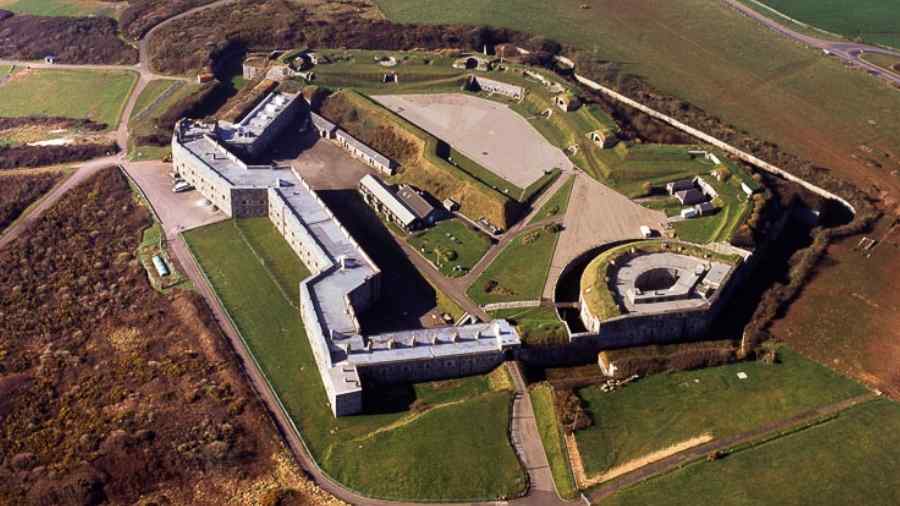
Constructed primarily from earth and stone, the fort was designed to absorb artillery fire rather than resist it with vertical walls. This low-profile approach reduced visibility from the sea and increased resilience against bombardment. Underground magazines, barracks, and passages were carefully planned to protect both soldiers and ammunition.
Architectural Design and Layout
Unlike medieval castles built to impress, Tregantle Fort was designed to disappear into the landscape. Its strength lay in subtlety and function.
Earthworks and Ditches
Deep ditches and embankments surrounded the fort, making direct assault extremely difficult. These features were engineered to slow advancing infantry while exposing them to defensive fire from within the fort.
Internal Structures
Within the fort, barrack rooms, storage areas, and gun emplacements were arranged with military efficiency. Ventilation shafts and drainage systems reflected the advanced engineering standards of the time, ensuring that the fort could remain operational for extended periods.
Armament and Military Capability
Although plans for Tregantle Fort included a formidable array of artillery, its full armament was never realised.
Intended Firepower
Designs called for multiple heavy guns capable of engaging ships at long range. These weapons would have complemented coastal batteries closer to the shoreline, creating layered defence zones.
Reality of Deployment
In practice, the fort was lightly manned and only partially armed. Changes in military doctrine and the rapid pace of technological advancement meant that some planned weapons became obsolete before installation.
Daily Life at Tregantle Fort
Life within the fort was disciplined and routine, shaped by the rhythms of military service.
The Garrison Experience
Soldiers stationed at Tregantle Fort trained regularly, maintained equipment, and stood watch over the coastline. Conditions could be harsh, particularly during winter months when Atlantic winds swept across the exposed headland.
Community and Isolation
Despite its proximity to nearby villages, the fort remained relatively isolated. This separation fostered a strong sense of camaraderie among the garrison, as soldiers relied on one another in a demanding environment.
Role During the World Wars
The twentieth century brought renewed relevance to Tregantle Fort, even as its original purpose evolved.
World War I
During the First World War, the fort served primarily as a training and accommodation site. Although it did not see direct combat, its strategic position remained valuable for coastal observation.
World War II and Allied Use
In the Second World War, the surrounding area was used extensively for training, including by Allied forces preparing for operations in Europe. The fort’s ranges and terrain provided realistic conditions for infantry exercises.
Post-War Use and Modern Status
After 1945, Britain’s military priorities shifted, but Tregantle Fort retained a functional role.
Training and Restricted Access
The site continued to be used for military training, particularly rifle practice. As a result, public access has remained limited, preserving the fort’s structure but keeping it largely hidden from view.
Heritage Recognition
Recognised as a scheduled monument and listed structure, Tregantle Fort is protected for its historical and architectural significance. These designations ensure that its story will be preserved for future generations.
Tregantle Fort in the Landscape
One of the fort’s most striking qualities is its relationship with the surrounding environment.
Coastal Beauty and Military Purpose
The contrast between rugged natural beauty and austere military design gives the site a unique character. Grassy embankments blend seamlessly into the hills, masking the fort’s true scale.
Influence on Local Identity
For nearby communities, the fort is a familiar landmark, symbolising both protection and heritage. It stands as a reminder of Cornwall’s strategic importance in national defence.
Cultural and Historical Significance
Beyond its physical presence, Tregantle Fort holds deep cultural meaning.
A Reflection of Victorian Britain
The fort embodies the confidence, anxiety, and engineering ambition of Victorian Britain. It illustrates how national fears can shape landscapes and leave lasting marks on history.
Educational Value
For historians and students, the fort offers insights into nineteenth-century military planning, coastal defence strategies, and the evolution of warfare.
Conclusion
Tregantle Fort remains one of Cornwall’s most compelling yet understated historic sites. Conceived in an age of uncertainty, it reflects the ingenuity and determination of those tasked with defending Britain’s shores. Though time and technology have altered its role, the fort’s presence endures—quiet, resilient, and deeply connected to the land it was built to protect. As both a military relic and a cultural landmark, Tregantle Fort continues to command respect, curiosity, and admiration from all who learn its story.
FAQs
Is Tregantle Fort open to the public?
Public access is generally restricted due to ongoing military use, though the surrounding areas can be viewed from public paths.
Why was Tregantle Fort built?
It was constructed to defend the western approaches to Plymouth during a period of heightened invasion fears in the nineteenth century.
Did the fort ever see combat?
The fort was never involved in direct combat but played important training and defensive roles during both world wars.
What makes Tregantle Fort unique?
Its low-profile earthwork design and integration into the landscape distinguish it from more traditional stone fortresses.
Is the fort protected today?
Yes, it is recognised as a heritage site and protected for its historical significance.