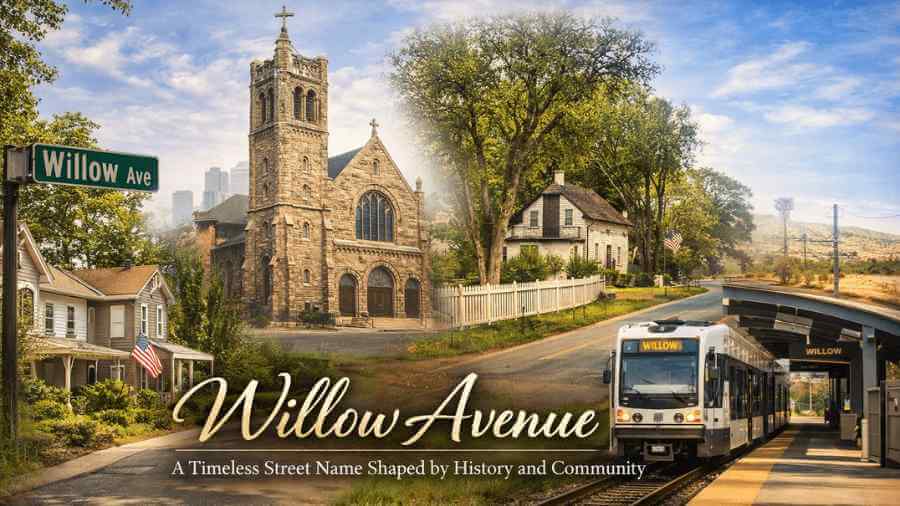
Willow Avenue is a name that appears quietly yet confidently across towns and cities, carrying with it layers of meaning that go far beyond a simple street sign. From tree-lined neighbourhoods and historic districts to planned urban developments and transport corridors, Willow Avenue reflects how communities name, shape, and remember their surroundings. While the name itself is shared, the stories behind it are deeply local, rooted in geography, culture, and history.
The Meaning Behind the Name Willow Avenue
The word willow has long been associated with nature, water, and calm landscapes. Willow trees typically grow near rivers and streams, their branches bending gently with the wind. Historically, streets named Willow Avenue often emerged in areas where such trees were once common or where planners wished to evoke a sense of greenery and tranquillity.
The use of Avenue also matters. Traditionally, an avenue implied a wider street, sometimes planted with trees, designed to be more than a narrow residential lane. Together, the name Willow Avenue suggests balance: nature meeting structured development, softness alongside order.
Willow Avenue in Historic American Towns
Cortland, New York
In Cortland, Willow Avenue carries a strong historical identity. During the nineteenth century, willow trees were planted along nearby waterways, shaping the character of the area. As the town expanded, the street retained its name even after the original trees disappeared.
Today, Willow Avenue in Cortland stands as a reminder of the town’s early relationship with its natural environment. The name preserves local memory, reflecting how communities often choose continuity over change when it comes to place names. Residents may walk the street without seeing willows, yet the history remains embedded in the name itself.
Urban Life and Community Identity
Hoboken, New Jersey
In Hoboken, Willow Avenue plays a more urban role. It runs through dense residential areas and forms part of the city’s everyday rhythm. Shops, homes, and community spaces surround it, making it a lived-in street rather than a symbolic one.
One of its most recognisable landmarks is the Church of Our Lady of Grace, which adds cultural and spiritual significance to the avenue. In this setting, Willow Avenue is not about distant history or planned imagery; it is about daily life, routine, and neighbourhood connection.
The street shows how a simple name can become central to identity when it is woven into the experiences of generations of residents.
Preservation and Heritage
Rockleigh, New Jersey
In the small borough of Rockleigh, Willow Avenue has a quieter but equally important role. It forms part of a historic district recognised for its architectural and cultural value. Here, preservation matters more than expansion.
Willow Avenue in Rockleigh reflects how street names contribute to heritage. The buildings, layout, and surroundings work together to maintain a sense of the past. In such places, the name Willow Avenue supports a broader effort to protect history, reinforcing continuity and identity within a small community.
Modern Planning and Development
California City, California
In California City, Willow Avenue represents something different again. This city was designed with ambition, aiming to grow rapidly through planned development. Streets like Willow Avenue were named to create an appealing image, often drawing on natural terms regardless of the surrounding landscape.
Here, Willow Avenue is closely linked to land ownership, housing plots, and development potential. It demonstrates how street names can be aspirational, chosen to project comfort and desirability even in challenging environments. The name becomes part of marketing, planning, and long-term vision rather than inherited tradition.
Transport, Movement, and Connectivity
Pittsburgh Area, Pennsylvania
In the Pittsburgh region, Willow Avenue influences transport identity through Willow Station. While the station itself is the focal point, the naming reflects the importance of nearby streets in shaping how people navigate and understand the city.
This connection shows that Willow Avenue is not only residential or symbolic. In some areas, it contributes to movement, accessibility, and regional planning, linking neighbourhoods through public transport and infrastructure.
Why Willow Avenue Appears So Often
The repetition of Willow Avenue across locations is not accidental. Several factors explain its popularity:
Natural association: Willow trees symbolise calm and beauty.
Positive imagery: The name feels welcoming and familiar.
Planning tradition: Avenues were often named to reflect landscape ideals.
Cultural continuity: Once established, names are rarely changed.
As a result, Willow Avenue becomes a shared linguistic space, understood instinctively as a residential or community-focused street.
Daily Life on Willow Avenue
Regardless of location, Willow Avenue typically supports everyday living. Children grow up on it, neighbours interact along it, and routines form around it. Whether busy or quiet, historic or modern, the avenue becomes part of personal stories.
This human element is what ultimately gives the name meaning. While maps and records define Willow Avenue officially, it is the experiences of residents that define it emotionally.
Willow Avenue and Urban Memory
Street names function as anchors of memory. Even when landscapes change, names endure. Willow Avenue often outlives the trees, buildings, or planning ideas that inspired it. In doing so, it connects present-day communities to their past.
This persistence highlights the importance of naming in urban development. A street name is not simply practical; it is narrative, carrying echoes of earlier decisions, environments, and values.
The Broader Cultural Appeal of Willow Avenue
Beyond geography, Willow Avenue resonates because it feels timeless. It avoids trends and remains neutral yet evocative. This is why it fits comfortably in both historic towns and newly planned cities.
Its appeal lies in balance: familiar but not generic, gentle but grounded. That balance allows Willow Avenue to adapt across regions while retaining its core identity.
Conclusion
Willow Avenue is far more than a repeated street name. It represents how communities interact with nature, history, planning, and everyday life. From historic towns like Cortland to urban centres such as Hoboken, from preserved districts in Rockleigh to ambitious developments in California City, Willow Avenue reflects local identity through a shared name.
Its lasting presence shows how simple words can carry deep meaning, shaping how places are remembered and experienced. Willow Avenue endures because it connects people to place, memory, and community—quietly, consistently, and across generations.