Pippa Wicks: Leadership, Retail Transformation, and the Story of a Modern British Executive

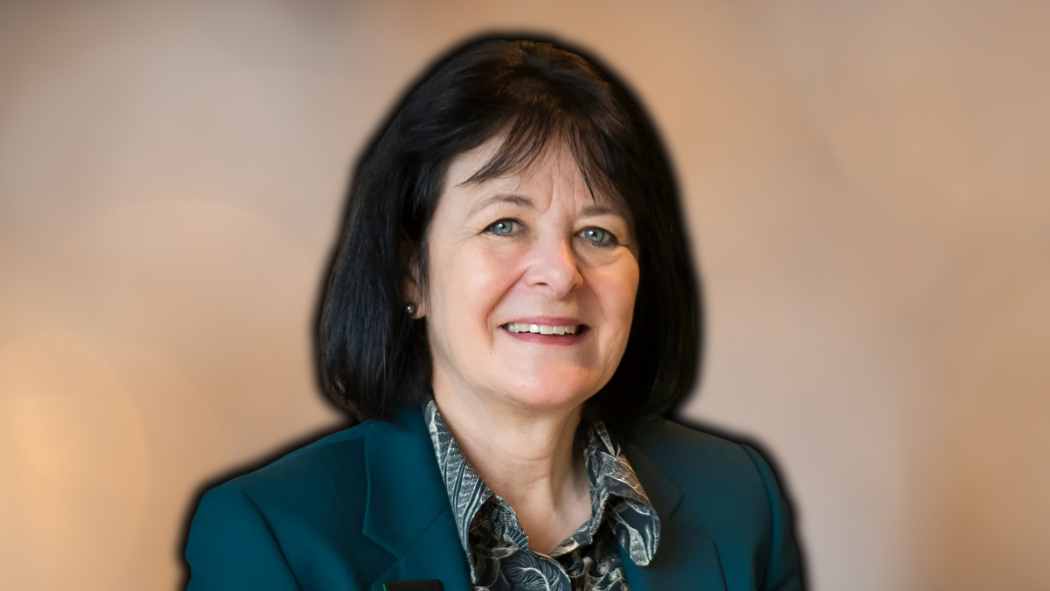
Pippa Wicks is a name that has become closely associated with transformation, challenge, and debate in modern British retail and corporate leadership. Her career spans consultancy, finance, and executive leadership at some of the United Kingdom’s most recognisable organisations. Admired by some for her decisiveness and strategic clarity, and criticised by others for the disruption her ideas introduced, Pippa Wicks represents a particular style of leadership that reflects the pressures and realities of twenty-first-century business.
Early Life and Education
Pippa Wicks was born in the early 1960s in the United Kingdom, growing up during a period of economic and social change. This era shaped a generation that would later face globalisation, technological acceleration, and shifting consumer behaviour. Her academic path reflects intellectual curiosity rather than a narrow focus on business from the outset.
She studied zoology at the University of Oxford, an unconventional choice for someone who would later become a prominent business executive. This scientific background is often overlooked, yet it played an important role in shaping her analytical approach. Studying zoology requires structured thinking, data interpretation, and an understanding of complex systems, skills that translate well into corporate strategy and problem-solving.
Following her undergraduate degree, she continued her education at London Business School, where she developed formal expertise in management, finance, and leadership. This combination of scientific reasoning and business training would later become a defining feature of her professional style.
Entry into Consulting and Early Career Development
Pippa Wicks began her professional career in management consultancy, a field known for demanding workloads, intellectual rigour, and exposure to a wide range of industries. She worked at Bain & Company, one of the world’s leading strategy consultancies, where she gained experience advising senior executives on growth, restructuring, and operational efficiency.
Consultancy is often described as a training ground for future leaders, and in Wicks’s case this description is particularly accurate. Her work required her to understand organisations quickly, identify underlying problems, and propose practical solutions under tight deadlines. These early experiences helped her develop confidence in decision-making and communication at board level.
She later became involved with the founding of AlixPartners Europe, a firm specialising in turnaround and transformation. This role placed her at the centre of complex corporate challenges, including distressed businesses, underperforming divisions, and large-scale change programmes. Rather than incremental improvement, the focus was on decisive action, a theme that would recur throughout her career.
Financial and Corporate Leadership Roles
Beyond consultancy, Pippa Wicks also held senior financial and corporate roles in major organisations. She served as Chief Financial Officer at Courtaulds Textiles, gaining hands-on experience in operational finance, manufacturing economics, and global supply chains. This period added depth to her understanding of how strategy translates into day-to-day business realities.
She also worked at Pearson, a global education company, where she held senior leadership responsibilities during a time of significant digital and structural change. These roles broadened her exposure beyond retail, reinforcing her reputation as a versatile executive capable of operating across sectors.
What stands out during this phase of her career is her willingness to take on difficult assignments. Rather than seeking stable or comfortable positions, she consistently gravitated towards environments where transformation was necessary and often urgent.
Role at the Co-operative Group
One of the most significant chapters in Pippa Wicks’s career was her time at the Co-operative Group. She joined the organisation during a period of recovery following financial difficulties and governance challenges. As Deputy Chief Executive, she played a central role in stabilising the business and reshaping its strategy.
The Co-op is a unique organisation within British retail, combining commercial objectives with ethical values and member ownership. Navigating this structure required sensitivity as well as commercial acumen. Wicks was involved in driving operational improvements, strengthening financial performance, and modernising parts of the organisation while maintaining its social mission.
Her work at the Co-op reinforced her reputation as a transformation specialist. It also demonstrated her ability to operate within value-led organisations, an experience that would later prove highly relevant to her next major role.
Appointment at John Lewis & Partners
In 2020, Pippa Wicks was appointed Executive Director of John Lewis & Partners, one of the most iconic names in British retail. The appointment came at a time of extraordinary challenge. The retail sector was already under pressure from online competition, changing consumer habits, and declining high-street footfall. The COVID-19 pandemic then intensified these challenges dramatically.
Her remit included responsibility for the John Lewis department store business, covering trading, merchandising, marketing, and customer proposition. Expectations were high, and scrutiny was intense from the outset.
John Lewis is not an ordinary retailer. Its employee-owned partnership model, strong internal culture, and long-standing customer promises have created deep emotional connections with both staff and the public. Leading change within such an organisation requires not only strategic clarity but also cultural sensitivity.
Strategic Decisions and Controversies
During her tenure, Pippa Wicks introduced a number of significant strategic changes. Among the most widely discussed was the decision to end the “Never Knowingly Undersold” price promise, a cornerstone of the John Lewis brand for decades. She argued that the pledge was no longer commercially sustainable in a market defined by online price comparison and relentless discounting.
Another major initiative was the introduction of the Anyday range, designed to offer more affordable products and broaden the brand’s appeal. This move reflected a recognition that middle-market retailers needed to adapt to changing consumer spending patterns, particularly during periods of economic uncertainty.
These decisions generated strong reactions. Supporters saw them as necessary steps to ensure long-term survival. Critics viewed them as a departure from the values that had defined the brand. The debate highlighted a broader tension within retail: how to balance heritage with commercial reality.
Leadership Style and Cultural Fit
Much of the discussion around Pippa Wicks’s time at John Lewis focused on leadership style. Known for her directness and decisiveness, she brought a consultancy-influenced approach to an organisation with a deeply collaborative tradition.
Some partners welcomed the clarity and urgency she introduced, particularly in the face of financial pressure. Others felt that the pace and tone of change conflicted with the partnership ethos. This divergence of views illustrates how leadership effectiveness is often shaped as much by organisational context as by individual capability.
Importantly, the challenges she faced were not solely personal. They reflected structural tensions within the retail sector and the difficulty of transforming legacy businesses while preserving their identity.
Departure and Reflections
Pippa Wicks left John Lewis in early 2023, less than three years after her appointment. Her departure was widely reported and analysed, often framed as a consequence of cultural mismatch or strategic disagreement. While such narratives are appealing, they risk oversimplifying a complex situation.
Transforming a major retailer during a global pandemic, supply chain disruption, and cost-of-living crisis is an immense challenge. Outcomes are influenced by numerous factors beyond any one individual’s control. Her tenure should therefore be viewed within this broader context rather than judged solely by individual decisions.
Return to Advisory Work
Following her departure from John Lewis, Pippa Wicks returned to advisory and board-level roles, including senior advisory work at AlixPartners. This phase of her career represents a return to her roots in consultancy and transformation, albeit at a more strategic level.
As an adviser, she brings decades of experience across retail, finance, and corporate restructuring. Her insights are particularly valuable to organisations facing disruption, governance challenges, or the need for rapid change.
This transition also reflects a broader trend among senior executives, who increasingly combine portfolio careers with advisory, non-executive, and mentoring roles.
Influence on British Retail and Leadership Thinking
Beyond specific roles, Pippa Wicks has influenced conversations about leadership and retail strategy in the UK. Her career raises important questions about how traditional businesses adapt to modern pressures, how leaders communicate change, and how organisations reconcile values with financial sustainability.
She represents a generation of executives who must navigate unprecedented levels of complexity, from digital transformation to social expectations and economic volatility. Whether one agrees with all her decisions or not, her willingness to confront difficult realities has made her a significant figure in contemporary business discourse.
Lessons from Her Career
There are several broader lessons to be drawn from Pippa Wicks’s professional journey. First, non-linear career paths can be powerful. Her background in science, consultancy, finance, and retail demonstrates the value of diverse experience.
Second, transformation is rarely comfortable. Leaders tasked with change will inevitably face resistance, particularly in organisations with strong traditions. The measure of leadership is not universal approval but the ability to make informed, courageous decisions.
Finally, context matters. A leadership approach that succeeds in one organisation may struggle in another. Understanding culture, values, and stakeholder expectations is as important as strategic insight.
Conclusion
Pippa Wicks is a complex and influential figure in British business, embodying both the possibilities and the tensions of modern leadership. Her career reflects intelligence, resilience, and a readiness to tackle some of the most demanding challenges in retail and corporate transformation.
Rather than reducing her story to a single role or controversy, it is more accurate to view it as part of a broader narrative about change, leadership, and adaptation in a rapidly evolving economic landscape. For anyone interested in the realities of executive decision-making, her journey offers valuable insight and enduring lessons.