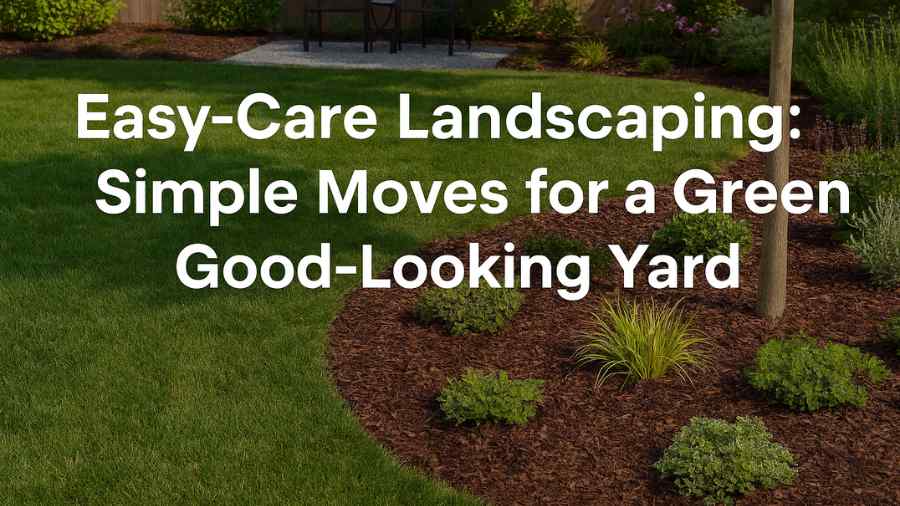
A yard can look full and healthy without taking over your weekends. The trick is to stop treating lawn care like a never-ending list of chores. Instead, set up your space so it naturally needs less attention. That means making a few smart choices up front, then relying on routines that are simple, repeatable, and forgiving.
Below are practical, low-effort strategies that reduce mowing, watering, weeding, and general “what now?” stress—without sacrificing a lush look.
Start With a Reality Check (So Your Plan Actually Sticks)
Before you buy plants or spread seed, take ten minutes to observe what you already have. This step saves hours later.
Walk the yard at different times of day. Notice where the sun hits longest, where shade stays stubborn, and where water collects after rain. Those patterns will dictate what thrives with minimal input. If you fight them, you’ll end up babysitting the landscape.
Also, be honest about time. If you only want to do yard work twice a month, design for that. Low-maintenance isn’t a product you purchase. It’s a system you build.
Transitioning to an easier yard starts with one decision: stop trying to make every part of the space behave the same way.
Shrink the High-Maintenance Lawn Area
Grass is often the most demanding part of a yard. It wants water. It wants mowing. It invites weeds. If you reduce the amount of turf, you automatically reduce your workload.
You don’t have to remove the lawn entirely. Just be strategic. Consider keeping grass where it earns its keep—play areas, pet zones, or open space you genuinely use. Then convert the “decorative lawn” sections into something easier, like:
- Mulched planting beds
- Ground covers (more on this soon)
- Gravel paths or sitting areas
- Native plant borders
This is one of the fastest ways to lower maintenance while still improving how the yard looks. Less lawn also means less edging, fewer bare spots, and fewer fertilizer decisions.
Choose Plants That Want to Live Where You Put Them
Plant selection does more to reduce maintenance than any tool or product. Pick species that naturally tolerate your conditions and you’ll spend less time correcting problems.
Focus on these traits:
- Drought tolerance (less watering)
- Disease resistance (less treating)
- Slow to moderate growth (less pruning)
- Perennial habit (less replanting)
Native plants are often a strong choice because they’ve evolved for local soils and weather. They aren’t automatically “hands-off,” but they are typically lower drama.
For guidance that’s dependable and location-aware, resources like USDA can help you understand plant hardiness zones and basic climate factors that affect what will thrive with minimal effort.
Aim for clusters of the same plant rather than one of everything. Repetition looks intentional, fills space faster, and simplifies care because each group has the same needs.
Replace Bare Soil With Mulch (And Keep It There)
Bare soil is an invitation. Weeds see it as open real estate.
A consistent mulch layer is one of the most practical shortcuts you can use. It reduces weed germination, stabilizes soil moisture, and protects roots from temperature swings. It also makes beds look finished even when plants are small.
A good rule is 2–3 inches of mulch in planting beds. Keep it pulled back slightly from plant stems and tree trunks to avoid rot and pests. Refresh it as it breaks down.
If you want maximum low-maintenance, use mulch in wide, clean bed shapes with defined edges. The cleaner the lines, the less the yard looks “messy,” even if the plants are casual.
Let Ground Covers Do the Work for You
Ground covers are the quiet heroes of easy-care landscaping. They spread, they shade the soil, and they reduce weed pressure. Once established, many require little attention beyond occasional trimming.
Depending on your region and sun exposure, options might include creeping thyme, sedum, ajuga, or native low-growing species. The best ground cover is the one that thrives in your exact conditions without constant watering.
Use ground covers in difficult areas like slopes, narrow side yards, and the strip between sidewalk and fence—places that are annoying to mow and easy to neglect.
Water Smarter, Not More
A low-maintenance yard still needs water, especially during establishment. But after that, your goal is efficiency.
Deep, infrequent watering encourages stronger roots. Shallow, frequent watering trains plants to stay dependent and fragile. If you can, prioritize:
- Soaker hoses in beds
- Drip irrigation for shrubs and perennials
- Timers that prevent “oops, I forgot” watering
Also, water early in the morning. It reduces evaporation and lowers the risk of disease compared to evening watering.
If you have a larger property or you mow frequently, comfort matters too. Adding a riding lawn mower canopy can make routine mowing less punishing in hot sun, which helps you stick to a consistent schedule instead of letting the grass get out of hand.
Reduce Mowing Effort With a Better Routine
Mowing becomes stressful when it’s irregular. Letting grass get tall forces you to cut more at once, which weakens the lawn and creates clumps. That triggers more cleanup. It’s a cycle.
A simple rule: never remove more than one-third of the grass height in a single mow. It keeps the lawn healthier and reduces visible shock.
Other easy wins:
- Keep blades sharp. Dull blades tear grass and make it look brown.
- Mow slightly higher in summer to shade soil and slow weeds.
- Leave clippings when possible. They return nutrients and save time bagging.
If you hate edging, redesign. Add wider bed borders, stone edges, or mulch strips near fences and around trees so you’re not trimming tight corners every week.
Build Weed Resistance Into the Design
Weeds aren’t just a maintenance issue. They’re a design issue.
Most weeds thrive when soil is exposed and plants are spaced too far apart. That means one of the best weed-control strategies is simple: fill space.
Use a “right plant, right place” approach and plant densely enough that mature plants touch or nearly touch. You’ll reduce light hitting the soil, which suppresses weed growth naturally.
When weeds do show up, remove them early. A five-minute pass every week is easier than a two-hour rescue mission once a month.
And skip the temptation to constantly disturb the soil. Frequent digging brings dormant weed seeds to the surface. Mulch and stable plant cover do the opposite.
Make Maintenance Zones (So You Don’t Manage Everything the Same Way)
Not every part of the yard deserves the same standard. This is where many homeowners waste effort.
Divide your space into zones:
- Show zone: front entry, walkway edges, the view from the patio
- Use zone: play space, grilling area, pet area
- Background zone: side yards, back corners, utility areas
Keep the show zone neat and simple. Make it easy to maintain. This is where clean edges and mulch shine.
In the background zone, allow more rugged planting. Use shrubs, native perennials, and ground covers that can handle some neglect. The yard will still look good overall because the most visible areas look intentional.
This zoning approach creates the feeling of a well-kept property without demanding constant effort across every square foot.
Do Two Seasonal Resets Instead of Weekly Perfection
Low-maintenance yards aren’t maintenance-free. They’re just designed for fewer interventions.
Instead of chasing perfection every weekend, plan for two “reset” weekends per year—one in spring and one in fall. Use those times to:
- Refresh mulch
- Cut back dead perennial growth
- Re-edge beds
- Check irrigation or hoses
- Overseed thin lawn areas (if needed)
Then keep a light routine the rest of the year. Ten to fifteen minutes at a time. A quick walk-through. Small fixes. This keeps the yard stable and prevents big, exhausting catch-up sessions.
Keep It Simple and Let the Yard Mature
A yard gets easier when it fills in. New landscapes are always more work at first because plants are establishing and bare spots invite weeds.
Be patient. Let plants grow into their space. Resist constant rearranging. Each change creates disruption and new maintenance.