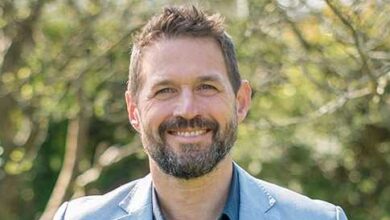
Bryony Worthington is one of the most influential figures in the modern era of climate policy and environmental reform in the United Kingdom. Her name is often associated with bold climate laws, transformative environmental organisations, and powerful advocacy within government. Yet what makes her so distinct is not simply her political or professional status, but her unusual ability to bridge different worlds. She began as an environmental activist and evolved into an architectural mind behind one of the most significant climate laws in British history. Her story is a case study in how one determined individual can influence national change, global discussions and long-term climate policy.
The life of Bryony Worthington offers more than biographical interest. It provides a roadmap for understanding how climate action can shift from grassroots energy to legal obligation, then translate into institutions and enduring movements. Her achievements stretch across government, industry, civil society, academic environments and charitable foundations. Each stage of her career reflects a new chapter in the changing landscape of environmental reform. More importantly, Worthington remains relevant today as climate debate intensifies, and the political urgency surrounding energy security, global warming and net-zero commitments becomes even stronger.
Early Life and Academic Foundation
Bryony Worthington was born in 1971 and grew up in Britain at a time when climate change was only beginning to enter mainstream political debate. Unlike many policymakers who come from legal or economic backgrounds, she studied English Literature at the University of Cambridge. At first glance, her academic focus may seem unrelated to climate policy, but it later proved to be a strength. Her ability to communicate complex environmental ideas and translate climate science into compelling language was vital in her legislative achievements.
During her early career she worked with environmental and conservation organisations, which offered her first exposure to climate justice, ecological threats and policy barriers. These experiences shaped her conviction that the climate problem was not merely scientific or environmental. It was institutional and political, and therefore required solutions that were structural and legal rather than simply moral or academic.
Entering the Environmental Movement
Worthington’s involvement with major environmental campaigns began in the early 2000s, a significant period in British ecological politics. The world was starting to acknowledge climate change as an international crisis, yet government action remained inconsistent. Worthington joined one of Britain’s major environmental organisations as a climate campaigner, pushing public pressure and political advocacy.
Her work reflected a deeper understanding of climate action: it could not succeed without public participation, government enforcement and corporate accountability. From the beginning she embraced a strategy that blended grassroots activism with institutional reform. Instead of pushing for single issues, she focused on systemic change and long-term commitments.
The Making of a Legislative Architect
Bryony Worthington’s most groundbreaking moment came when she was selected to work directly with government on climate legislation. She became part of a working group that led to the creation of the Climate Change Act 2008, one of the world’s first comprehensive and legally binding climate laws. This Act forced the UK government to commit to long-term emission reduction targets, to plan carbon budgets and to treat climate change as a permanent governance priority rather than a temporary electoral agenda.
The Climate Change Act was revolutionary because it transformed climate obligations from public promises into legal responsibilities. It introduced a legally enforceable structure that continues to influence national policy today. Many experts credit Worthington as one of the key minds behind the Act’s framework, strategy and drafting. Her influence demonstrated how activism and expertise can combine to reshape national law.
Beyond Activism: Moving into Policy and Industry
Rather than remaining only in the activist sector, Worthington went on to work directly with the private energy industry. She joined a major energy company, advising on sustainability and policy transformation. This experience strengthened her capability to examine climate change from multiple angles: the political system, the private sector and the non-profit sphere. Very few environmental leaders have succeeded in navigating these three worlds simultaneously, and this gave her a rare and balanced understanding of both opportunity and resistance inside the global energy system.
Founding Environmental Organisations
Some climate leaders excel in government. Others thrive in campaign groups. Worthington managed to do both, and then moved on to build her own environmental institutions. She founded a non-profit organisation that advocated for reform in energy policy, carbon markets and emissions trading. Her organisation later evolved into a large international climate think tank which focuses on helping countries transition away from fossil fuels and embrace renewable power systems. Through this work, Worthington helped elevate data-driven research into mainstream policy.
One of the crucial aspects of her environmental philosophy is the belief that policy must be supported by evidence, analysis and accountability. She insisted that climate data should not remain in academic literature but be made readable and actionable for decision-makers, media and the public.
Entry into the House of Lords
After years of shaping policy from outside the government, Worthington was appointed to the House of Lords. Her arrival in Britain’s upper legislative chamber was historic because it brought deep environmental experience into one of the nation’s most powerful decision-making bodies. Unlike career politicians, she entered Parliament already equipped with technical knowledge, legislative background and real-world experience in climate campaigns.
In the House of Lords she worked as a spokesperson on climate and energy, influencing debates and policy at the highest level. She also became involved in cross-party initiatives aimed at placing environmental priorities at the heart of political decision-making. Her voice was not limited to one political group, which allowed her to operate freely and independently across party lines.
Evolving Climate Philosophy
One of the most interesting elements of Worthington’s climate journey is her intellectual adaptability. Unlike many activists, she changed her views as new scientific, technological and policy developments emerged. Early in her career she was sceptical about nuclear power. Later she recognised the potential role of advanced nuclear technologies in helping to meet carbon-neutral goals. Her thinking evolved to reflect a pragmatic rather than ideological approach.
Throughout her work she stressed the importance of:
Clean electricity
Carbon-free industrial systems
Renewable energy expansion
Potential use of nuclear power
Responsible use of carbon capture
Phasing out fossil fuels
Improved energy storage and grid solutions
Her climate philosophy is defined by flexibility, innovation and realism rather than rigid doctrine.
Influence on Global Energy Debate
Worthington has become internationally recognised for her contributions to global climate dialogue. Her work has influenced:
Government policies
Energy markets
Environmental organisations
International climate negotiations
Public awareness
She has spoken extensively on issues such as net zero targets, clean energy transitions, energy security and fossil fuel decline. Her voice is respected because it balances idealism with realism. She is neither a radical revolutionary nor a passive observer. Instead, she belongs to a new generation of pragmatic climate leaders who believe in achievable and enforceable solutions.
Why Bryony Worthington Matters Today
In an era where climate change has become one of the most critical challenges facing humanity, Worthington’s role is more relevant than ever. She demonstrates that true climate leadership requires:
Knowledge of law and policy
Ability to navigate institutions
Confidence to challenge systems
Long-term vision
Political courage
Cross-sector collaboration
Her contribution to drafting climate legislation continues to shape Britain’s energy future. Her leadership in environmental advocacy still influences global debate. Her career proves that environmental change is not just a campaign, but a collective and structural transformation.
Lessons Future Generations Can Learn
Bryony Worthington’s life offers important lessons for activists, policymakers and anyone concerned about climate justice. She shows that change requires persistence over decades. Laws must be written, organisations must be built and governments must be held accountable. Her work highlights the importance of blending activism with institutional power. It also proves that public engagement, scientific evidence and political commitment are not opposing forces but essential partners.
Conclusion
Bryony Worthington is more than a legislator, campaigner or environmentalist. She is a strategic thinker and a bridge between sectors that traditionally remain divided. Her work demonstrates that solving climate change requires laws, investment, research, public participation and long-term leadership. She stands as a pioneering figure in modern climate history whose influence has shaped national policy and global environmental discourse. Her legacy is a reminder that one individual, equipped with knowledge, courage and determination, can write legislation that changes the course of a nation and inspires the world to move towards a cleaner and more sustainable future.