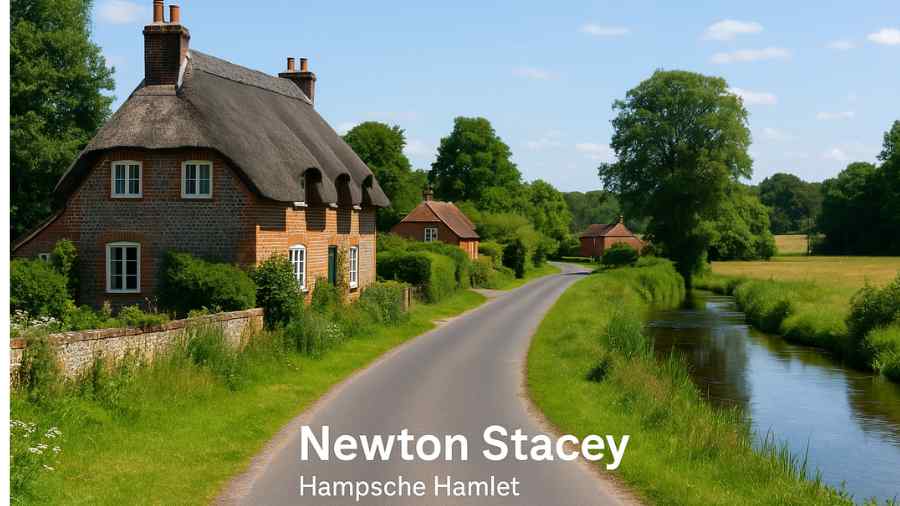
Newton Stacey is one of those rare English hamlets that preserves its charm, authenticity, and deep historical roots with astonishing clarity. Tucked within the peaceful countryside of Hampshire, it offers an intimate view into rural English life, where centuries-old heritage, natural beauty, and traditional village character come together in remarkable harmony.
The Origins and Meaning of Newton Stacey
The name “Newton” comes from Old English, simply meaning “new farm” or “new settlement,” a term historically used for communities established alongside older ones. The second part of the name, “Stacey,” is believed to have developed from medieval landholders who influenced the region’s identity. Over time, the two parts merged, forming the name that today identifies this small but historically significant hamlet.
Newton Stacey traces its roots back many centuries, with mentions in early administrative records and strong connections to the surrounding region of Test Valley. Located in the civil parish of Barton Stacey, the hamlet forms part of an ancient landscape filled with archaeological interest, medieval boundaries, and early English settlement patterns.
Location and Rural Setting
Newton Stacey lies in the heart of Hampshire’s countryside, an area renowned for its greenery, open fields, chalk streams, and gentle hills. The River Test and River Dever are close companions to the surrounding area, shaping the natural environment and supporting a wide ecosystem. These rivers are nationally famous for their crystal-clear chalk waters and are considered some of the finest fly-fishing locations in England.
The hamlet is small, quiet, and surrounded by farmland, with narrow country lanes, mature woodlands, and sweeping meadows. This isolation gives it a timeless quality, appealing to walkers, nature enthusiasts, and anyone seeking tranquillity away from busy urban life.
Historical Development Throughout the Centuries
The region’s history spans deep into the medieval era. Newton Stacey shares its heritage with Barton Stacey, a parish with evidence of continuous settlement since ancient times. Archaeological finds across Test Valley reveal Roman activity, prehistoric structures, and medieval agricultural systems. Newton Stacey’s landscape reflects these layers of history, with subtle traces still visible in pathways, field shapes, and old boundaries.
Throughout the Middle Ages, the hamlet formed part of rural farming communities essential to local landowners. As centuries passed, Newton Stacey retained its agricultural identity, becoming a quiet rural retreat rather than a growing settlement. Many traditional English hamlets disappeared over time, but Newton Stacey survived, partly due to its strong agricultural foundations and its connection to surrounding estates.
Traditional Architecture and Hamlet Layout
Newton Stacey features architecture typical of historic Hampshire countryside. While small, the hamlet includes houses and farm buildings that echo older English styles—brick cottages with tiled roofs, barns built in traditional fashion, and properties shaped by local materials. This architectural continuity contributes significantly to the hamlet’s charm and identity.
Its layout remains linear and compact, consistent with ancient rural settlements. Homes are spread along quiet lanes rather than clustered into dense blocks, reflecting a pattern where farming families lived close to their fields and animals. This organic, unplanned design preserves the authenticity of the hamlet and ensures it blends naturally with the surrounding countryside.
Natural Landscape and Ecology
The landscape around Newton Stacey has long been treasured for its biodiversity. The nearby River Test and River Dever create ideal habitats for wildlife, including trout, kingfishers, herons, and numerous plant species. The mix of chalk streams, wetlands, and meadowland makes the area especially rich in ecological value.
Bransbury Common, not far from Newton Stacey, is a protected natural environment known for wildflowers, bird species, and grazing wildlife. The greater Test Valley region is considered one of the most scenic rural areas in southern England, making Newton Stacey part of a wider conservation and nature-focused environment.
Life in a Modern English Hamlet
Although rural and quiet, Newton Stacey forms part of a broader, interconnected community within the parish of Barton Stacey. Residents enjoy a slower pace of life far removed from city noise, with access to open spaces, walking routes, cycling paths, and village activities in neighbouring settlements.
The hamlet’s charm lies in its stillness. There are no crowded high streets, commercial centres, or large residential estates. Instead, Newton Stacey offers a way of living that reflects heritage, respect for nature, and a close relationship with the land. It’s a place where mornings begin with the sound of birds, evenings end with soft countryside silence, and life moves with the rhythm of the seasons.
Connectivity and Accessibility
Despite its rural feel, Newton Stacey has convenient access to nearby towns and routes. Hampshire is well-connected, and the region’s roadways make it easy to reach places such as Winchester, Andover, Whitchurch, and Stockbridge. The area’s connectivity is part of its appeal—allowing residents and visitors to enjoy rural living without being fully removed from modern amenities.
Cultural Heritage and Community Identity
Newton Stacey’s identity is deeply linked to English rural heritage. Life revolves around the countryside, the environment, and traditions that have endured through centuries. The surrounding parish hosts local events, neighbouring villages share community activities, and rural customs remain important.
The hamlet also shares cultural ties with the wider Test Valley, an area revered for its literary connections, agricultural history, and traditional countryside values. The landscape has inspired writers, artists, and historians for generations, contributing to Hampshire’s cultural footprint.
Tourism and Things to See
Newton Stacey is not a traditional tourist hotspot, which is precisely why it appeals to travellers seeking authenticity. Visitors often come for:
1. Countryside Walks
Miles of footpaths allow walkers to explore fields, rivers, and woodlands.
2. Wildlife Watching
The region is home to rare birds, mammals, and wild plants.
3. Chalk Stream Fishing
The rivers in the area are world-famous for fly-fishing.
4. Scenic Photography
Its untouched natural views offer stunning photographic opportunities.
5. Nearby Historic Towns
Places like Winchester and Stockbridge provide deeper historical exploration.
Newton Stacey gives an experience of England’s quiet countryside at its finest—perfect for nature lovers, photographers, hikers, and anyone wishing to escape fast-paced environments.
Why Newton Stacey Holds Long-Term Appeal
This hamlet’s value lies in its preserved authenticity. In a world becoming increasingly digital, urban, and fast-moving, places like Newton Stacey remind us of the heritage and simplicity that shaped the country. Its surroundings are green and peaceful, its history is rich, and its community is small but deeply connected to the land.
Many visitors describe the area as calming, refreshing, and emotionally grounding. The combination of rural beauty, traditional architecture, and historical richness gives Newton Stacey a timeless identity.
Conclusion
Newton Stacey stands as a shining example of a traditional English hamlet, offering beauty, tranquillity, and a fascinating historical backdrop. Its landscapes are picturesque, its heritage is remarkably preserved, and its rural spirit remains strong. From its medieval origins to its modern-day peaceful setting, Newton Stacey embodies the charm of countryside England in its purest form. With its rich environment, cultural depth, and serene atmosphere, it continues to represent the enduring heart of rural Hampshire.