Penarth Downhill Derby: A Community Tradition of Creativity, Competition, and Coastal Charm

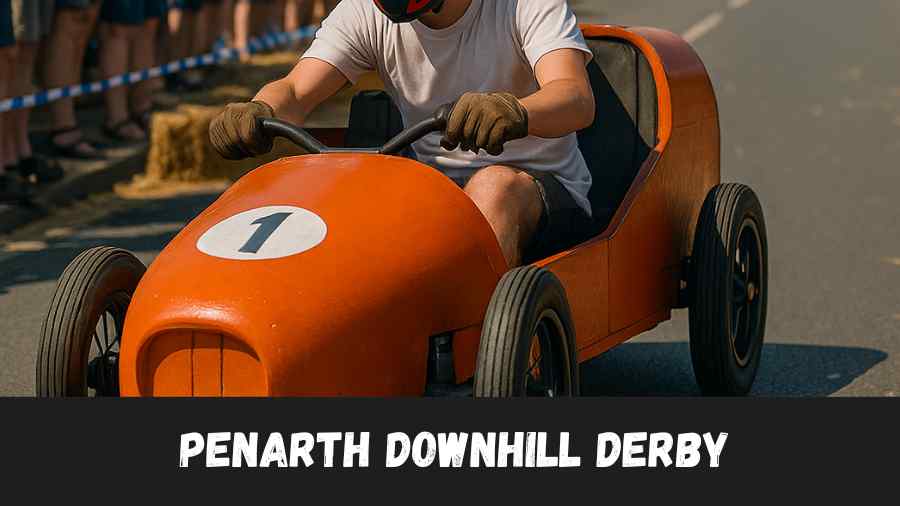
Every town has its own traditions that give it identity, spirit, and a reason for people to gather beyond daily routine. For Penarth, a seaside town in South Wales, one such tradition was the Penarth Downhill Derby. What began as a creative, playful local event soon turned into a much-loved spectacle that brought together families, amateur engineers, local businesses, and visitors from far beyond the town. The Penarth Downhill Derby became more than just a race; it was a celebration of imagination, teamwork, craftsmanship, courage, and joyful chaos rolling at high speed down a steep hill toward the sea.
Although the event has now been discontinued, its legacy remains vivid in the memories of those who built carts, cheered from the pavements, or simply stood wide-eyed as colourful homemade karts whizzed down the winding slope. This article explores the history, purpose, cultural value, participants’ experiences, and the reasons behind the event’s end. It also reflects on what it meant to the community and why it continues to hold a special place in Penarth’s story.
The Origins of the Penarth Downhill Derby
The Penarth Downhill Derby formed part of the Penarth Summer Festival, a long-running series of seasonal celebrations located along and around the seaside promenade. The idea was inspired by soapbox racing traditions where entrants create their own non-motorised carts and compete using nothing but gravity and steering skill. Penarth’s naturally steep and scenic Cliff Hill provided the perfect track: a fast, visually dramatic and slightly risky downhill run with the sea at the finishing end.
From the start, the derby was open to participants of many ages and skill levels. All that was required was a homemade cart, a working brake system, and the courage to push off and let gravity take over. This openness encouraged both serious tinkerers and playful creators. Some spent weeks designing and testing aerodynamic bodies. Others built whimsical cars shaped like ducks, dragons, rockets, or favourite cartoon characters. It was this mixture of engineering seriousness and playful imagination that made the race unique.
The Race Track and the Challenge
The slope was approximately three hundred metres long, with natural bends and inclines that made steering critical. In many years, the organisers added extra challenges such as foam obstacles, water sprays, chicanes, or small ramps to increase excitement. Spectators lined both sides of the hill, cheering with the same excitement seen in major sporting events, even though the racers were amateur and the prizes mainly symbolic.
The start of each heat was full of tension. Racers positioned their carts, some crouched low to reduce wind resistance, others waving dramatically to the crowd. When the signal came, there was a surge of energy. Wheels squeaked, crowds shouted, camera shutters clicked, and the carts sped downhill. The fastest runs were astonishingly impressive, proving that with enough knowledge of balance, weight distribution, and wheel friction, even a homemade cart could reach remarkable speeds.
Yet speed was only one part of the Derby’s identity. Many spectators came to see the most imaginative designs rather than the fastest. A cart shaped like a pirate ship might not win the race, but it could win the hearts of the crowd and the award for most creative build.
Community Participation and Cultural Importance
One of the main reasons the Penarth Downhill Derby developed such affection is that it encouraged community involvement. Local families worked together on cart designs, children and parents building side by side. Schools, clubs, and youth groups also took part, turning the competition into a teaching experience in engineering, teamwork, and problem-solving.
Local businesses supported the event in various ways, including sponsorships, material donations, or simply by offering festival food and refreshments along the promenade. The event also attracted tourists, bringing economic energy to the seafront. During Derby weekend, Penarth felt alive, warm, and festive.
It was not only a race day but a town-wide gathering. People who rarely met throughout the year shared laughter, competition, and conversation. The Derby reminded everyone that community joy does not always have to come from large commercial events; sometimes, a hill, some wheels, and some imagination are enough.
Safety, Rules, and Responsibility
While the Derby was full of fun and creativity, it also carried a level of risk. The steepness of the hill made speed inevitable, and steering a homemade cart was not always predictable. The organisers implemented safety rules such as helmet requirements, braking system checks, and supervision during practice runs. Curtains of hay bales were placed in key areas, and trained marshals monitored the course.
These safety measures were respected, and organisers worked hard to balance excitement with protection. However, every physical event carries some unavoidable risk, especially when gravity, speed, and homemade vehicles are involved.
The Event’s Discontinuation
In recent years, the Penarth Downhill Derby came to a halt. A serious accident during the event raised concerns about the ability to continue the race safely. Although many believed that the Derby was an essential part of Penarth’s identity, the well-being of participants and spectators had to take priority. Organisers decided that the risks outweighed the benefits and chose to discontinue the event.
This decision was met with sadness, nostalgia, and reflection. For many, it marked the end of an era. People shared stories, photos, and memories of past races. Some even hoped for a redesign or a safer alternative, but the hill itself remains the same: steep, unpredictable, and beautiful.
Legacy and Lessons
The legacy of the Penarth Downhill Derby lives on in the spirit it inspired. It taught children and adults alike that creativity is not just something that happens in classrooms or workshops; it can become a shared public celebration. It showed that competition does not have to be about winning trophies; it can be about building something with your hands and sharing that joy with others. It reminded the town that community identity is something living and real, strengthened by events where people actively participate rather than simply observe.
Even though the race no longer runs, many still remember the feeling of summer air, the smell of festival food, the sound of cheering from the crowd, and the rush of adrenaline as carts raced downhill. The Derby encouraged invention, bravery, and community spirit. These values remain part of Penarth’s cultural identity even without the physical event.
The Possibility of Future Events
Although the Penarth Downhill Derby itself has ended, the idea of a community event driven by creativity and participation remains alive. Penarth may explore future gatherings, perhaps with different rules or safer designs. The Derby showed just how much enthusiasm exists for shared celebrations. What comes next could be something new, surprising, and just as meaningful.
Conclusion
The penarth downhill derby was more than just a race. It was a festival of imagination, engineering, community, and seaside celebration. It brought together people of all ages and backgrounds, united by the simple joy of building something and letting it fly downhill into the wind. Its ending marks the close of a beloved chapter, but its legacy continues in the memories and spirit of those who took part.
The Derby remains a reminder that community is built not only through grand achievements but through shared joy, creativity, and laughter echoing down a sunny seaside hill.