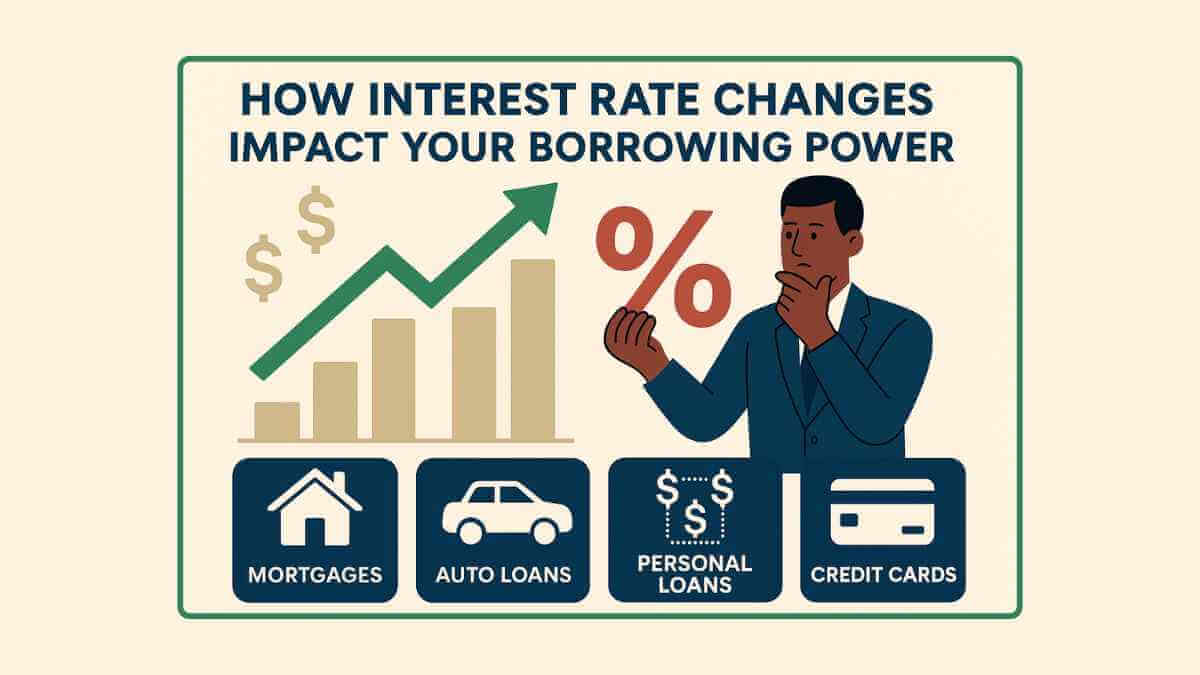
Interest rates, set by the Federal Reserve, impact all borrowing, including mortgages, credit card balances, and business expansion plans. Understanding these shifts helps individuals make smarter financial decisions and potentially save money over time. This guide aims to explain how interest rate changes affect various types of borrowing and offers strategies for navigating these shifts.
How Interest Rates Affect Different Types of Borrowing
Mortgages
Mortgage rates move closely with federal interest rate changes, though they don’t mirror them exactly. When rates rise, your monthly mortgage payment increases significantly. A 1% rate increase on a $300,000 mortgage adds roughly $175 to your monthly payment over a 30-year term.
Fixed-rate mortgages protect you from future increases once you lock in your rate. Adjustable-rate mortgages (ARMs) can become more expensive as rates climb, potentially pushing monthly payments beyond your budget.
Auto Loans
Car loan rates typically increase alongside federal rates, but the impact varies by loan term and your credit score. Shorter loan terms generally offer lower rates but higher monthly payments. Longer terms spread costs but accumulate more interest over time.
New car loans often feature promotional rates from manufacturers, which can shield you from some rate increases. Used car loans typically carry higher rates and react more quickly to market changes.
Personal Loans
Personal loans respond rapidly to interest rate changes since they’re unsecured debt. These loans already carry higher rates than mortgages or auto loans, so rate increases can push them into expensive territory quickly.
Fixed-rate personal loans offer payment predictability, while variable-rate options start lower but can climb substantially during rate-hiking cycles.
Business Loans
Business lending costs fluctuate with interest rates, affecting everything from equipment financing to working capital loans. Small business owners seeking an SBA loan for business acquisition will find that rising rates increase their total borrowing costs, potentially affecting deal feasibility.
Lines of credit often use variable rates tied to the prime rate, making them sensitive to Federal Reserve decisions. Term loans may offer fixed rates for stability but at higher initial costs during high-rate periods.
Credit Cards
Credit card rates climb quickly when the Federal Reserve raises rates. Most cards use variable rates tied to the prime rate, so increases appear within one to two billing cycles.
Existing balances become more expensive to carry, while new purchases compound the problem. Credit cards typically maintain the highest interest rates among common borrowing options.
Specific Examples of Rate Impact
Mortgage Payment Changes
Consider a $400,000 home purchase with a 30-year fixed mortgage:
- At 3% interest: Monthly payment of $1,686
- At 5% interest: Monthly payment of $2,147
- Difference: $461 more per month, or $165,960 over the loan term
Auto Loan Scenarios
For a $25,000 car loan over five years:
- At 4% interest: Monthly payment of $460
- At 7% interest: Monthly payment of $495
- Total interest difference: $2,100 over the loan term
Credit Card Balance Costs
A $5,000 credit card balance with minimum payments:
- At 18% APR: Payoff time of 17 years, total interest of $6,923
- At 24% APR: Payoff time of 23 years, total interest of $11,934
- Additional cost: $5,011 in extra interest
Tips for Navigating Interest Rate Changes
Refinancing Strategies
Monitor rate trends to identify refinancing opportunities. When rates drop significantly below your current rate, calculate potential savings minus closing costs. Generally, refinancing makes sense if you’ll recover closing costs within two to three years through lower payments.
Consider cash-out refinancing carefully during low-rate periods, as it increases your loan balance. Rate-and-term refinancing focuses purely on reducing your interest rate or changing your loan term.
Debt Consolidation Options
High-interest debt becomes more burdensome when rates rise across the board. Consolidation loans can simplify payments and potentially reduce your average interest rate, especially for credit card debt.
Balance transfer credit cards offer promotional 0% rates but require discipline to pay off balances before promotional periods end. Personal loans provide fixed rates and terms for predictable payoff schedules.
Budget Adjustments
Rising rates require proactive budget management. Calculate how rate increases affect your monthly obligations and identify areas to reduce spending. Emergency funds become more valuable when borrowing costs increase.
Review variable-rate loans regularly and consider converting to fixed rates if you expect continued increases. This strategy works best when you can lock in rates before further increases occur.
Timing Major Purchases
Rate trends influence purchase timing decisions. Large expenses like homes or vehicles may warrant acceleration during low-rate periods. Conversely, delaying non-essential purchases during high-rate periods can save substantial money.
Business expansions and equipment purchases also benefit from rate-conscious timing. However, don’t let rate speculation override solid business fundamentals or personal financial readiness.
Conclusion
Now that you have a better understanding of the different types of borrowing and their potential impact on your financial situation, it’s important to carefully consider your options before taking on any new debt.