With past research by Gartner having found that the average business spends about 9.5% of its revenue on marketing, you will want to be sure of getting the greatest possible benefit from your own company’s outlay.
Even if your business’s digital marketing strategy was once very solid and brought dependable results, its effectiveness could wane amid shifts in audiences and platforms and as your business grows.
So, it can be helpful to know about certain classic early warning signs of issues with your digital marketing strategy, like those set out below. This can then enable your company to pivot to a fresh approach before you waste any more money or miss key opportunities.
-
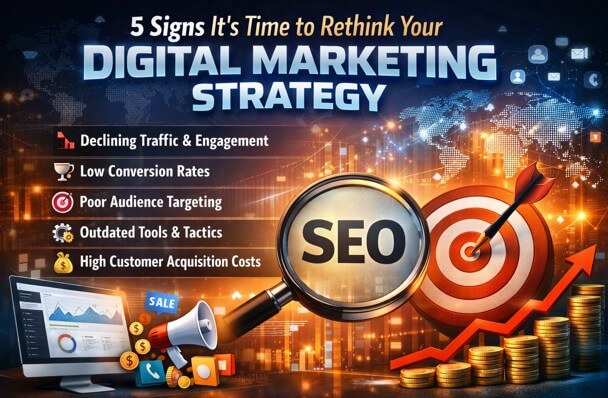
Traffic And Engagement Have Plateaued or Declined
Using analytics tools like Google Analytics, such metrics as your website’s organic traffic, time spent on site, or pages per session may not be as impressive as they once were.
Certain types of content that previously drove clicks and shares may have largely ceased to do so, even if you publish such content more frequently. Or perhaps you find yourself needing to keep putting more of your financial resources into your paid campaigns, just to maintain the same level of reach?
These problems indicate that your brand’s search engine optimisation (SEO), content, and/or user experience (UX) may not be well-aligned with present search algorithms or the expectations of your target audiences.
-
Conversion Rates Are on the Slide
People might be visiting your website, but they may not be converting into leads or customers. The click-through rates on your website’s calls to action (CTAs) may be low, or you might suffer from high bounce rates (in other words, people are frequently leaving your site after viewing only one page, without interacting further).
Problems like these can be symptoms of a user journey that fails to fire the visitor’s imagination. Perhaps your website’s messaging isn’t effectively targeted or adequately aligned with what your target customers want?
Remember that in the mid-2020s, visitors expect highly personalised experiences. This underscores the importance of having a well-optimised funnel to maximise sales.
-
Something Feels ‘Off’ About Your Audience Targeting
We referenced the importance of targeting above, so we might as well elaborate slightly here.
You may find that your brand’s social posts, emails, and ads seem to be attracting the wrong demographics or reaching uninterested prospects – an indicator that you may need to overhaul your segmentation or positioning.
Issues with audience targeting may manifest in social media comments showing confusion about what your business sells, or your chosen ad platforms reporting low relevance scores or poor quality rankings.
-
You’re Dependent on Outdated Tactics, Technology, And Tools
One of the key lessons of effective digital marketing is that what worked yesterday is never guaranteed to work today. Indeed, your campaigns may rely to such a degree on manual processes or legacy tools, that you overlook the fresh opportunities your competitors are taking advantage of to get ahead of you in the market.
If, for instance, your in-house team only seems to go as far as talking about the implementation of automation and AI-driven personalisation, instead of doing it, or if voice search optimisation doesn’t yet have any place in your roadmap, now could be the time for a comprehensive refresh to your strategy.
-
Your Customer Acquisition Costs Exceed Lifetime Value
So, you’ve been keeping a close eye over time on your organisation’s customer lifetime value (CLV), but you notice your customer acquisition costs (CAC) are creeping above this.
In addition, perhaps you’ve realised that discounts and promotions seem to be your business’s main driver for new signups, rather than organic interest? Maybe you’re also struggling to attract loyal repeat business? If so, these are all less-than-encouraging signs.
The good news is that with the right expert-led SEO and marketing strategies – arrived at after a full strategy audit – your business can soon begin tackling issues like the above and put itself on a pathway to strong, futureproofed growth.